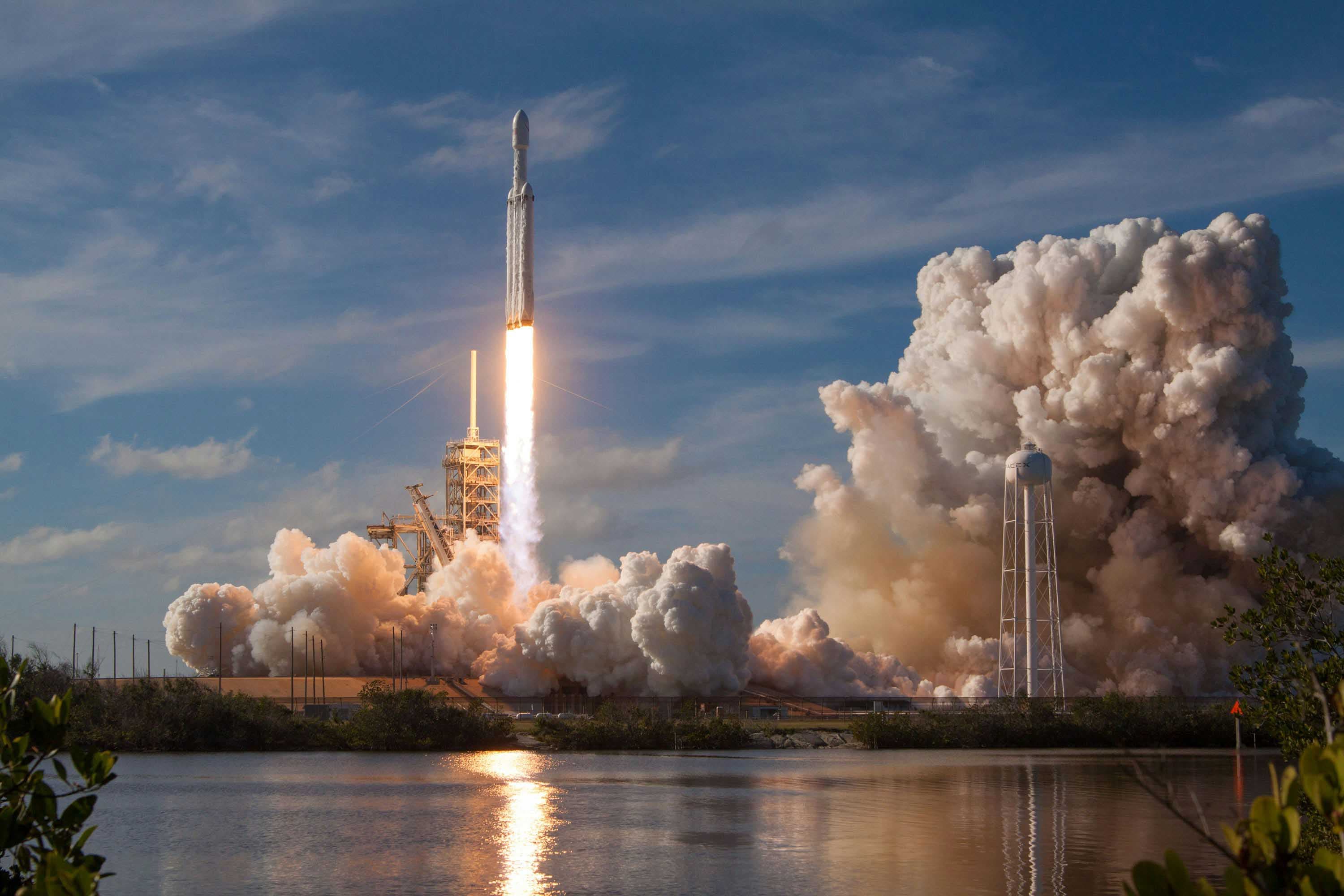
The last two weeks may go down as one of the most consequential periods in America's efforts to lead the world in space. A multinational crew of four launched from Florida aboard an American rocket to fly by the Moon for the first time in more than half a century. Separately, the Trump administration unveiled "Ignition," its 21st-century space program — a seismic shift redirecting $30 billion in space commitments through 2032 toward building a permanent lunar base rather than replacing the aging International Space Station.
The new plans arrive as the White House contends these ambitions can be achieved alongside significant NASA budget cuts, including the retirement of the ISS and reductions to science funding.
Together, these developments have triggered an intense reassessment across the aerospace sector. Companies must decide whether to realign with NASA's new priorities and contract requirements. International partners face the same question: whether to reorient their contributions toward surface infrastructure. All stakeholders now operate under compressed development timelines incompatible with traditional procurement cycles — a shift that will have cascading effects on entrepreneurs, investors and employees, creating both uncertainty and opportunity.
Commercial space companies hoping to remain part of the mission must shift their messaging from "future capability" to "ready now," with proof points demonstrating speed, reusability and cost discipline. Governments must decide how — and whether — to plug in. The U.S. geopolitical framing, centered on competition with China, raises the stakes alongside the opportunity. Participants will face consequential political and business decisions requiring communications and public affairs strategies that balance ambition with credibility, and speed with safety.
FGS Global is positioned to help clients navigate these shifts — supporting efforts to position capabilities within NASA's new framework, shaping procurement priorities through engagement with Congressional appropriators and NASA leadership, managing contract restructuring and workforce transition announcements, and building coalitions across NASA centers, DoE nuclear programs and international space agencies to accelerate alignment and reduce execution risk.
Overview
NASA's March 24 announcement represents the most significant recalibration of U.S. space policy since the Artemis program's inception. Administrator Isaacman framed the strategy as a response to intensifying geopolitical competition and the maturation of commercial spaceflight. Striking in its ambition, it remains to be seen whether such a significant shift can be executed within the proposed timeline.
Core elements:
Gateway pause: Lunar orbital station indefinitely delayed; resources redirect to surface infrastructure
Three-phase lunar base: $20 billion investment over seven years for permanent crewed outpost by early 2030s
Revised Artemis timeline: Artemis II (flyby, 1 April 2026); Artemis III (Earth-orbit test, 2027); Artemis IV and V (landing, 2028)
CLPS 2.0 surge: 30 robotic missions starting 2027; $10 billion allocated through 2028
Nuclear propulsion priority: Space Reactor-1 Freedom targets Mars in 2028
Commercial transition: Post-Artemis V (2029), NASA procures landings commercially at six-month cadence
Notable trends
Competition as a driver
Isaacman explicitly cited China's lunar ambitions as justification for the accelerated timeline. Beijing's International Lunar Research Station (ILRS), a partnership with Russia and several emerging space nations, aims for initial operations by 2030. NASA's strategy positions the US to establish surface presence first, framing lunar infrastructure as a geopolitical imperative rather than purely scientific endeavor.
Implication: Expect sustained bipartisan Congressional support for lunar funding. National security framing insulates the program from discretionary budget cuts.
2. Speed and urgency
The Gateway pause is the clearest signal of NASA's shift. By deprioritizing the project, the agency compresses its critical path to lunar surface operations by an estimated 18-24 months. The CLPS 2.0 initiative, which will aim for 30 robotic landings in under two years, is unprecedented in pace and scale, requiring NASA to expand upon its CLPS provider base following an expected 2027 solicitation.
Implication: Contractors must demonstrate rapid prototyping and iterative development capabilities. Traditional multi-year development cycles are incompatible with the new cadence.
3. Government-to-commercial transition
Post-Artemis V, NASA will function as an anchor customer rather than prime developer. This mirrors the Commercial Crew and Cargo programs that now service the ISS. The shift reduces NASA's long-term capital exposure while creating a competitive market for lunar access.
Implication: Commercial firms with reusable lander technology (SpaceX Starship and Blue Origin Blue Moon) are positioned to dominate. Traditional cost-plus contractors face margin pressure.
4. Permanent presence as the new benchmark
Previous lunar strategies emphasized sortie missions – brief surface stays followed by return to orbit or Earth. Ignition commits to continuous habitation, requiring life support, power generation (likely nuclear fission reactors) and in-situ resource utilization (ISRU) for water and oxygen extraction.
Implication: The technology stack shifts from transportation to sustainability. Firms specializing in closed-loop life support, radiation shielding and regolith processing gain strategic relevance.
Key objectives
These strategic trends manifest in four concrete program shifts:
Three-phase lunar base
Phase 1 (Now-2029) deploys initial infrastructure and establishes crew rotations.
Phase 2 (2029-2032) adds international contributions (JAXA rover, expanded crew).
Phase 3 (2032+) achieves continuous human presence with Italian habitat, Canadian utility vehicle and ESA scientific integration.
Total investment: Approximately $30 billion.
Artemis timeline revision
Artemis II (1 April 2026): Crewed lunar flyby. Four astronauts test Orion systems in cislunar space.
Artemis III (2027): Earth-orbit mission. Tests docking procedures and integrated systems without lunar landing.
Artemis IV (2028): First landing under new strategy, though heat shield issues create schedule risk.
Artemis V (Late 2028): Final government-led mission. Establishes commercial transition framework.
CLPS 2.0: Robotic surge
NASA will contract up to 30 robotic landers from commercial providers between 2027-2028. Missions will scout landing sites and test ISRU technologies; deploy infrastructure for communications, navigation and autonomous operations.
Implication: Firms with reusable lander technology and nuclear engineering capabilities are positioned to capture the majority of CLPS 2.0 and base infrastructure contracts, while Gateway-focused contractors face headwinds.
Nuclear propulsion: Space Reactor-1 Freedom
NASA and the Department of Energy are co-developing a nuclear thermal propulsion (NTP) system for deep space missions. Space Reactor-1 Freedom will demonstrate the technology on a 2028 Mars cargo mission, cutting transit time from 6-9 months to approximately 4 months.
Implication: Nuclear power becomes the enabling technology for sustained lunar operations (surface reactors) and Mars exploration. Firms with nuclear engineering expertise gain strategic positioning.
Implications for stakeholders
These shifts create several distinct challenges and opportunities across stakeholder groups:
Aerospace primes
Gateway's pause forces renegotiations of existing contracts. Contractors focused on orbital infrastructure must pivot to surface systems or accept reduced scope. Orion and SLS providers remain insulated, but face pressure to accelerate delivery schedules.
Action: Proactively engage NASA on contract restructuring. Emphasize surface infrastructure capabilities (habitats, power systems, ISRU) in business development.
Commercial space sector
Industry reaction:
Dave Cavossa, President of the Commercial Space Federation, stated the announcement is "sowing concern and confusion" among member companies, particularly regarding procurement timelines and technical requirements for the commercial transition.
Blue Origin responded via X: “Lunar Permanence has always been a part of our vision. Our facilities, workforce, and production infrastructure are designed to support @NASAMoonBase. We're ready to meet the nation's needs. We're all in.”
Action: Companies with lander technology should accelerate reusability demonstrations. Life support and ISRU providers should pursue CLPS 2.0 payload contracts to establish flight heritage.
International partners
JAXA (Phase 2 rover), Italy (Phase 3 habitat), Canada (Phase 3 utility vehicle) and ESA (scientific integration) retain defined roles. However, other public and private Gateway contributors face uncertainty.
Action: International space agencies should formalize surface infrastructure commitments through bilateral agreements. Emphasize complementary capabilities (robotics, habitation, mobility) that reduce NASA's development burden.
Political and fiscal landscape
Congressional considerations:
NASA's FY2027 budget request will reflect Ignition priorities amid $3 trillion federal deficits. A change in Congress (2026) or White House (2028) could trigger further shifts, though bipartisan support for space competition with China provides some insulation.
Action: Engage appropriators early in the FY2027 budget cycle, emphasizing job creation, technological leadership and national security benefits.
How FGS Global can help
Navigating this strategic shift requires sophisticated stakeholder engagement across government, industry and international partners. FGS Global helps clients:
Position capabilities within NASA's new framework through strategic communications that translate technical offerings into value propositions for policymakers
Shape procurement priorities by engaging Congressional appropriators, NASA leadership and OSTP
Manage transitions including contract restructuring announcements, workforce changes and investor communications
Build coalitions by mapping decision-makers across NASA centers, DoE nuclear programs and international agencies
Contact us to discuss how we can support your organization through this transition.