
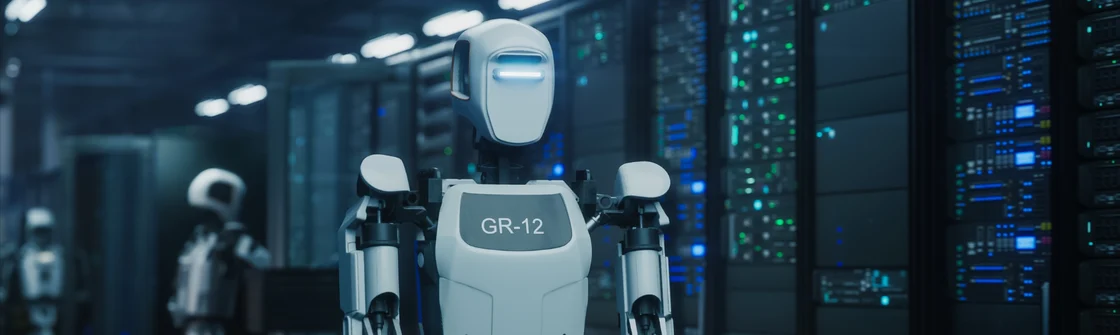
Insight: A year after the DeepSeek launch, China’s AI and robotics sectors are pivoting from experimental models to applications. The annual CCTV Spring Festival gala, China’s most-watched television show, served as a high-profile showroom for this transition, featuring ByteDance’s Seedance 2.0 video generation model and Unitree’s G1 humanoid robots. The sight of dozens of robots performing coordinated martial arts signaled a leap in embodied AI and cluster-control hardware. Yet these gains are shadowed by intensifying "distillation" disputes. Following question marks over DeepSeek’s efficiency, Chinese labs now face formal accusations from Anthropic and OpenAI of harvesting Western reasoning models to accelerate their own development.
Impact: This rapid iteration creates a fraught competitive landscape. It underscores China’s capacity to commercialize frontier technology at scale, moving humanoids from the lab to mass-market visibility and driving up short-term orders. However, friction with firms like Anthropic points toward a period of trench warfare over intellectual property and training methodologies. If Chinese firms continue to successfully "distill" high-end reasoning into low-cost hardware, traditional moats built on compute volume and proprietary IP may no longer hold. As the gap between Western innovation and Chinese scale collapses through these controversial methods, one must ask: where will this competition end?

