
New finance minister, same Prabowo economics

The Macro - New finance minister, same Prabowo economics

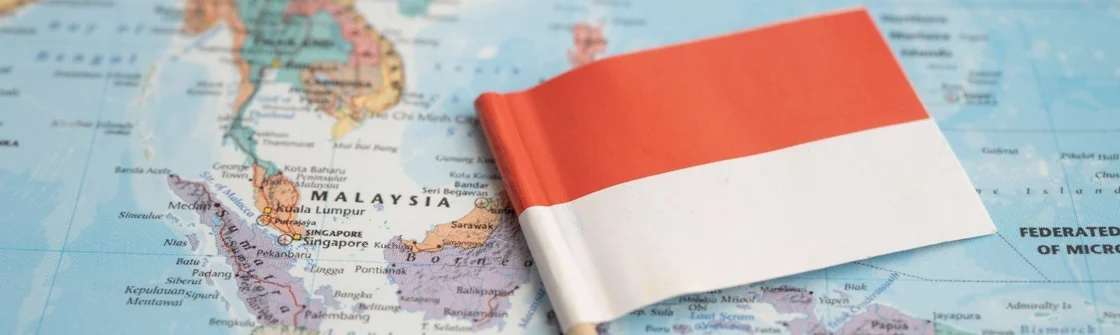
Insight: Indonesia has appointed its third finance minister in less than two years, with President Prabowo Subianto replacing Purbaya Yudhi Sadewa with his deputy, veteran technocrat Suahasil Nazara. The reshuffle comes after a bruising period for investor confidence: the rupiah hit a record low earlier this year, Moody’s and Fitch shifted Indonesia’s sovereign-rating outlook to negative, while Purbaya’s unconventional efforts to stimulate growth repeatedly raised questions over fiscal discipline and policy coordination. Suahasil’s appointment raises the prospect of a more orthodox and institutionally coordinated approach to fiscal policy. He is pledging to run a “credible” state budget, maintain trustworthy public communication, and to keep the fiscal deficit below the statutory 3% of GDP ceiling, while ensuring the budget continues to fund Prabowo’s priority programs.

Impact: For investors, this may quell some of the near-term uncertainty around how Indonesia manages its finances - but it does not amount to a reversal of Prabowo’s broader economic agenda. Expensive flagship programmes, subsidy pressures, and a more state-led approach to economic management remain firmly in place, alongside policies requiring foreign businesses to navigate domestic-processing requirements, export-retention rules and changing taxes and levies. The real test for Suahasil is whether he will have enough political room to impose fiscal discipline when it collides with the President’s growth and spending ambitions. For foreign businesses, the upside will hopefully be greater certainty and predictability. But ultimately, Indonesia appears to be changing the style of economic policymaking rather than its direction.

Asia by numbers – $9 billion

The total market value of professionally authenticated and condition-rated Pokémon cards. As the generations that first grew up with Pokémon hit their 30s (and 40s!), nostalgia and higher disposable incomes have created a boom in trading of the collectibles. As the cards gain recognition as a genuine asset class, a vintage Pikachu Illustrator card from 1998 recently sold for $16.5 million. Buyers have also been spotted at trading card fairs with code-locked suitcases carrying thousands in cash, and professional graders have been completely overwhelmed with demand.

The Micro – China puts borders on brainpower

Insight: China has tightened controls on overseas travel under new entry-and-exit regulations that took effect on September 15. Authorities can prevent citizens from leaving if they are deemed to have violated export-control or technology-trade rules in ways that threaten China’s “industrial or technological security”. Separately, citizens who return after committing illegal or criminal acts abroad that harm China’s national security or interests may face exit bans of six months to three years. Beijing says the measures target unlawful cross-border activity rather than ordinary travel. 

Impact: The US-China technology contest has long focused on controlling what crosses borders: advanced chips, sensitive data, investment and intellectual property. China’s new rules apply the same national security logic to the people who possess valuable expertise, effectively putting borders around brainpower. This is a signal that decoupling is no longer about where companies manufacture or which technology they use, and may increasingly determine where scientists, engineers and executives can travel. The risk is a self-reinforcing cycle: tighter controls reduce the personal and professional exchanges that build trust, prompting both sides to impose more controls. The tech divide is becoming a talent divide – and passports are the new front line.

News you can use - North Korea discovers retail therapy

Insight: In most places, a cappuccino, a massage chair and a trip to the pet shop amount to an unremarkable weekend. In North Korea, they are signs of something much bigger. A country better known for deprivation is developing an unlikely appetite for the good life, with luxury malls, beach resorts, cafés and fitness centres spreading across Pyongyang and beyond. Imports of massage equipment have risen 40-fold over the past decade, while treadmill shipments are up more than 600%. Behind the consumer glow-up is an unusual problem for Kim Jong Un: analysts estimate North Korea now has a middle class of roughly eight million people, many with savings built through informal trade and, until recently, few places to spend them.  

Impact: Kim’s solution is retail therapy, but only on his terms. The more North Koreans spend in official shops, resorts and restaurants, the more money moves out of the informal markets that flourished after the 1990s famine and back into channels the government can tax, monitor and control. There is an economic payoff too: South Korea’s central bank estimates North Korea grew 3.5% in 2025, its third consecutive year above 3%, suggesting sanctions have not prevented pockets of domestic prosperity from emerging. The irony is that consumerism, often associated with greater individual choice, is being deployed here as another instrument of state control.

If you read one thing this week - Southeast Asia's hazardous haze

Southeast Asia's nations pledged to eliminate transboundary haze by 2020, but this year it is worse than ever. Dried out by slash-and-burn land clearance and then aggravated by a super El Niño that has choked off rainfall, thousands of acres of Indonesian peatland are on fire. The particulates they spew into the air trigger asthma, scar lung tissue, and can even cause cancer.

One way to monitor the situation is via this free website and map, provided by the official ASEAN body for monitoring transboundary haze.

September 18, 2026

Share

Want to see more of this in your inbox?