
Channel Surfing

Close-up of a passport page with a detailed immigration stamp pattern in red and blue, showing intricate security features and wavy lines.

Borderline Opinions

In light of recent immigration enforcement events in Minnesota, FGS Global’s Insights team canvassed suburban swing voters in nine key battleground states for their reactions.

Swing voters are increasingly focused on the humanitarian impact of enforcement tactics, with many concerned about how immigrants are treated. While immigration is not a top priority for most, the issue is linked to broader worries about democratic norms and institutions. For companies, engaging publicly on immigration carries reputational risk and limited upside with persuadable audiences.

Key findings include:

  • Humanitarian concerns are rising, with 55% of swing voters now less supportive of current immigration policies after recent events in Minnesota. Democrats (79%) are far more likely than Republicans (39%) to express diminished support; Independents are in the middle (54%).

  • Swing voters place immigration behind other key concerns. Far more rank inflation, protecting democracy, jobs and the economy, and taxes and government spending as the most important issue facing the U.S. today.

  • Views are shaped by competing values. Many prioritize dignity and humane treatment for immigrants, emphasizing due process. Some criticize ICE’s tactics as “rogue,” while others stress the rule of law and support deportation for illegal immigrants. Tension exists over targeting, with many preferring a focus on “true criminals.”

  • Companies face substantial risk in engaging publicly—unless the issue directly affects them. Only 16% of swing voters support companies taking public stances on immigration enforcement; most favor neutrality unless a company is directly affected. 

For more information, please reach out to insights@fgsglobal.com.
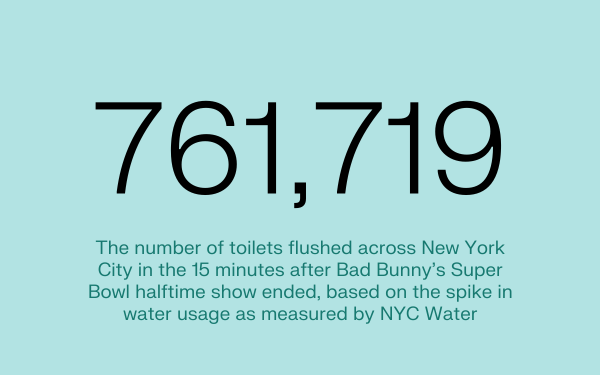
By the Numbers

Text reading "761,719: the number of toilet flushes in NYC in the 15 minutes after Bad Bunny's Super Bowl halftime show ended, as measured by NYC Water."

Ice Breakers

Cracked ice sheets floating on blue water, creating geometric patterns.ICE enforcement remains a pressing challenge for U.S. employers, with recent workplace raids and audits driving sharp declines in sales and workforce stability. However, insights from last week’s webinar with Rebecca Shi, CEO of the American Business Immigration Coalition, point to a shifting landscape where business advocacy is increasingly influential and optimism for bipartisan reform is rising.

Recent political developments, including election swings and public backlash against aggressive enforcement, have prompted more lawmakers to reconsider their approach to immigration. Some approaches offering practical solutions for labor shortages and legal status are gaining bipartisan support. 

Business leaders are uniquely positioned to shape this moment. Direct engagement with lawmakers, sharing real-world experiences and concerns, is more effective than ever. Whether through public advocacy or private conversations, the business community’s voice can help to build consensus and drive legislative action. To maximize impact, consider these advocacy strategies:

  • Meet directly with lawmakers and administration officials to share specific business and workforce stories.

  • Participate in local or national business coalitions to amplify your voice. 

  • Engage in both public and private advocacy, tailoring your approach to your organization’s risk profile.

  • Highlight the economic and human benefits of balanced reform in communications and stakeholder outreach.

  • Support bipartisan legislative efforts, such as the Dignity Act, that address workforce needs and humane policy.

For a deeper analysis of the strategic, reputational and workforce implications for your organization, please contact FGS Global’s Immigration team.

Channel Surfing

A well-organized workstation with a laptop, microphone, tablet, headphones, camera on a tripod, and soft lighting in purple tones.TikTok’s recent U.S. ownership transition has exposed deep instability in the creator economy. Reported widespread technical issues, falling engagement, erratic moderation and allegations of censorship have creators seeking alternatives.

This shift highlights a critical trend: creators are diversifying their presence across platforms to safeguard their communities and content. As the fragmentation of social media platforms accelerates, those who continue to pin their creator strategy to any particular channel risk being left behind. Instead, it’s time to place creators at the center of your communications approach.

After examining this trend, our AI + Innovation team offers three imperatives for communicators looking to future-proof their strategy:

  1. Build multi-platform partnerships. Seek out creators shaping conversations across YouTube, Instagram and emerging alternatives to ensure your brand’s story travels with them.

  2. Invest in long-term relationships. Move beyond one-off engagements. Ongoing collaborations help creators grow with your brand and adapt to shifting audience needs, building resilience against future platform disruptions.

  3. Empower authentic co-creation. Foster trust and creative freedom by inviting creators into the process. Their unique perspectives drive genuine engagement and keep your brand relevant wherever the conversation moves.

Bottom line: The creator economy is bigger than any one app. Elevating people over platforms is essential for building resilient, impactful communications in today’s unpredictable social landscape.

To learn more about FGS Global’s AI + Innovation offerings, contact the team at AIAdvisory@fgsglobal.com.

February 10, 2026
By Nedra Pickler, Irene Moskowitz and Erin Barth-Dwyer

Share

Want to see more of this in your inbox?