
Affirmative Reaction

Colorful wooden figurines arranged in rows, each painted a different color, symbolizing diversity and unity on a light background.

Affirmative Reaction

The Trump administration's opposition to corporate diversity programs is entering a new phase. President Trump's executive order issued Thursday banning "racially discriminatory DEI activities" by federal contractors signals sustained regulatory focus on antidiscrimination enforcement throughout 2026. 

To help organizations prepare for the potential ramifications, FGS Global's Social Issues & Impact experts have outlined what to expect:

  • Contractors face immediate deadlines. Federal contractors and funding recipients must navigate new contract provisions within 30 days, certification obligations and heightened investigative risk as the Attorney General pursues noncompliance cases.

  • Global operations complicate compliance. Multinational organizations face added complexity aligning U.S. legal requirements with reporting obligations in other jurisdictions where DEI frameworks differ.

  • Enforcement will expand beyond contractors. Non-contractor companies should anticipate increased Equal Employment Opportunity Commission enforcement actions and employment litigation, as the administration's merit-based hiring stance emboldens whistleblower complaints across all sectors.

  • Courts will shape the future. Legal uncertainty persists as challenges to DEI-related executive orders continue, with appellate and potential Supreme Court rulings poised to fundamentally reshape the landscape.

  • Reputational risks cut both ways. Political pressure mounts ahead of midterms, with critics seeking to expose alleged DEI violations while civil rights groups monitor corporate commitment.

To learn more, contact FGS Global’s Social Issues & Impact Sub-practice Leaders at socialimpact@fgsglobal.com.
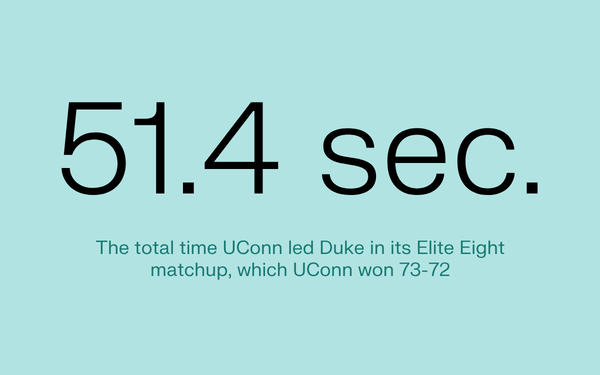

By the Numbers

Text on a light blue background: "51.4 sec. — The total time UConn led Duke in its Elite Eight matchup, which UConn won 73-72"

Xi You In May?

The highly anticipated meeting between Presidents Xi Jinping and Donald Trump was originally scheduled to begin today – but the two leaders won't be sitting down anytime soon. The summit has been pushed to May 14-15, with the White House citing the need for Trump to manage the escalating conflict with Iran, including urgent efforts to reopen the Strait of Hormuz, a critical oil chokepoint whose closure has already rattled global energy markets.

Beijing has said little publicly, though its Foreign Ministry noted leaders' summits play an "irreplaceable" role in guiding the bilateral relationship – a measured but pointed reminder of what is being deferred.

The postponement lands at a complicated moment. Few countries feel the Hormuz closure more acutely than China, which counts Iran among its largest oil suppliers and has deepened those energy ties as a deliberate hedge against Western pressure. That dependence gives Beijing a significant stake in how the conflict unfolds, and complicates its posture toward Washington.

The summit had been positioned as a critical opportunity to reset relations between the world's two foremost economic and military powers. With the Middle East now consuming Washington's attention, China is adopting a careful wait-and-see stance. But the longer the delay, the more uncertain the trajectory of U.S.-China relations becomes – and the higher the stakes when the two leaders finally sit down.

For more stories like this, subscribe to FGS Global’s Asia In Context newsletter.

Sora Long, Farewell

Purple abstract knot designs (OpenAI's logo) on a dark, striped background with green and pink lighting.Just months after its launch, OpenAI is shutting down its Sora AI video app and API, with no plans to fold the technology into ChatGPT. The move coincides with Disney's exit from a reported $1 billion licensing deal with the company — a significant vote of no confidence from one of the world's most powerful media brands.

OpenAI says it is redirecting resources toward a ChatGPT desktop "superapp," its Codex coding assistant and an AI-powered browser. The pivot reflects growing pressure on the company to prove that its business can extend profitably beyond core text-based products.

Sora's quiet exit points to a broader tension in the AI industry. Video generation is far more computationally expensive than text, making it difficult to operate at scale without a clear path to revenue. And while tools like Sora showcased genuinely impressive technical capabilities, the gap between what AI can do and what it can sustain commercially is coming into sharper focus. 

Legal liability and strategic risk remain unresolved across the AI video space, and other platforms face similar headwinds. For now, the story of AI video is less about technological limits than economic ones — a reminder that even splashy product launches can quietly disappear when the numbers don't work.

For more like this, subscribe to FGS Global’s Digital Insights newsletter.

March 31, 2026
By Nedra Pickler, Irene Moskowitz and Erin Barth-Dwyer

Share

Want to see more of this in your inbox?