Ready Position

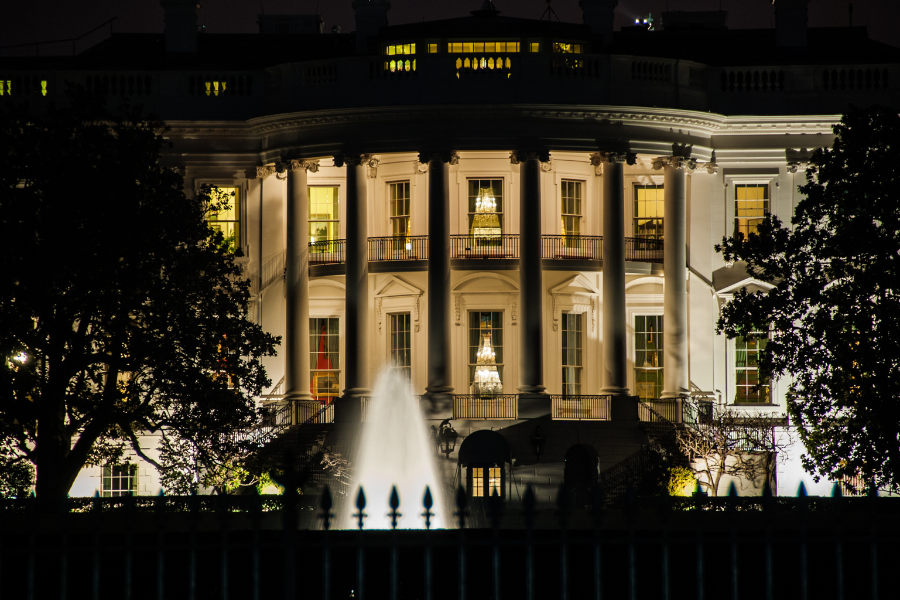
The White House at night, illuminated with warm lighting, surrounded by trees, and a fountain in the foreground.

Ready Position

As I was covering one of my first presidential campaign events as a cub reporter more than 20 years ago, a fellow journalist turned to me and asked, “What would you do if someone shot the candidate right now?”

I was in my 20s and dumbstruck, so he shared a list:

  • Always sit on the aisle near an exit — to avoid getting trapped in a scramble.

  • Keep your phone, pen and notepad in the same place in your bag, so your most important tools are always at the ready.

  • Store your news desk as your first emergency contact, and practice saying the words: "File this news flash: Gunshots fired at presidential campaign event."

In more than a decade covering the presidency before I joined our firm, I fortunately never had to use those steps. Saturday night, I was at the White House Correspondents’ Dinner, no longer a reporter but a guest along with a few other FGS colleagues.

Then the shots rang out.

The journalists at the dinner in their formalwear — to celebrate, not to work — immediately started doing their jobs. Phones and cameras out. Moving toward information, not away from it. Calm in the way that only comes from having imagined the unthinkable in advance.

I've been reflecting on that ever since, for all of us who want to rise to the moment when the worst happens, whatever that means for each of us. Most crises are predictable. What's your checklist? Who do you call first? Have you ever practiced out loud?

The journalists in the ballroom — and most especially the law enforcement agents who kept everyone safe — had their answers ready. That's worth something, in a moment when so much feels uncertain.

Nedra Pickler is an FGS partner and a former Associated Press White House reporter.
By the Numbers

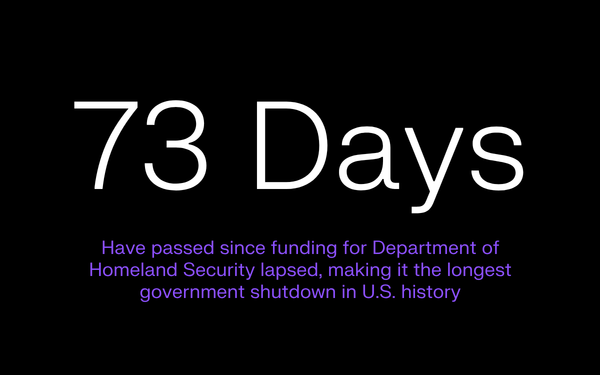
Text on a black background: "73 Days" in large font. Below in smaller text: "Have passed since funding for DHS lapsed, longest U.S. government shutdown."

Earning It

Person holding a smartphone with social media notification icons hovering above, showing messages, likes, and comments.The independent media boom has created a new tier of influential journalists — and a new set of rules for anyone trying to earn their attention. To gain better insight, FGS Global's Media Planning & Placement team lead Aaron Golds recently moderated a panel discussion with three prominent journalists who left legacy outlets to build their own platforms: Mosheh Oinounou, Alex Heath and Rachel Bade. 

When it comes to earned media, their advice was pointed: 

  • Kill the press release. A generic release signals you haven't done your homework. Journalists at this level receive hundreds of pitches a day — an untailored, boilerplate email goes straight to the trash.

  • Build the relationship before the ask. Cold pitches, even strong ones, underperform. Off-the-record conversations with executives ahead of any coverage request go a long way. In a world increasingly shaped by AI, human relationships matter more.

  • Lead with exclusivity. A story offered to one journalist is far more likely to generate a real splash than the same embargo sent to a dozen. Make them feel like they're getting something no one else has.

  • Come with assets. Independent journalists don't have graphics departments. Original data, polling, video or ready-to-use visuals make a pitch materially more useful — and more likely to get picked up.

  • Zoom out. Connect your client's story to a broader trend. A pitch that treats one announcement as the only story in the world is easy to ignore. One that places it in a larger narrative is harder to pass up.

  • Respect the credibility you're trying to borrow. Audiences have a finely tuned radar for inauthenticity. Anything that asks a journalist to compromise the independence that makes them worth pitching will backfire.

To learn more about our Media Planning & Placement capabilities, visit our website.

The Right To Remain Vocal

A group of professionals in a meeting room, engaged in discussion, smiling, with laptops, documents, and coffee on the table.Managing employee speech without sacrificing brand integrity is an increasingly pressing challenge for general counsels. At the ALM General Counsel Conference Midwest in Chicago earlier this month, FGS Global's Jill Lesser moderated a panel with senior legal and HR leaders from JLL, GE Aerospace and LevelBlue to examine how companies should respond when employee expression collides with corporate reputation. Here are the key takeaways from their discussion:

  • Silence is no longer neutral. The workforce has fundamentally changed. Employees expect a voice, and a company's response to that expectation is itself a brand decision, a culture decision and a legal decision, all at once.

  • Brand integrity compounds — until it doesn't. Organizations with strong alignment between stated values and actual behavior weather crises more effectively, attract talent and maintain stakeholder support. Where rhetoric diverges from reality, companies become targets for activist campaigns and regulatory scrutiny.

  • Policy alone won't solve it. The legal framework sets the floor, but culture and communication determine outcomes. Google, Netflix and Twitter each illustrate what happens when leadership lacks real insight into employee sentiment and respond defensively when tensions surface. 

The bottom line: Clarity and consistent application of policy are essential. A strong internal culture remains the most effective risk management tool available.

To learn more, read about FGS Global’s Social Impact & Strategy capabilities.

April 28, 2026
By Nedra Pickler, Irene Moskowitz and Erin Barth-Dwyer

Share

Want to see more of this in your inbox?