Window dressing

Glass building facade reflecting a blue sky, featuring intersecting lines and panels at various angles.

Window dressing

The 2026 IPO market has not unfolded as anyone expected. The conditions for a sustained reopening looked genuinely promising – until an energy shock, a tariff reset, and the continued disruption of generative AI made the path to market considerably more conditional.

The pipeline remains deep, but the bar for standing out has never been higher. Our Transaction & Financial Communications team has been closely tracking how these conditions are reshaping IPO readiness. They identify four questions every company should be able to answer before the window opens:

  1. Can you demonstrate resilience credibly? Investors are asking pointed questions about energy cost exposure, supply chain vulnerability, and AI's impact on business models before the roadshow begins. A resilience narrative needs to be built into the equity story, not developed reactively under pressure.

  2. Can you stand out in a crowded pipeline? With over 32,500 unsold PE portfolio assets globally, the question is no longer whether you can get to market – it's whether you can become a "must-own" name. That kind of profile takes 12 to 18 months to build.

  3. Have you answered "why now, why public"? For PE-backed and founder-led businesses alike, this question will be asked by every investor, journalist, and employee. A consistent, credible answer across every channel is not optional.

  4. Is your listing venue a communications decision, or just a structural one? The choice between London, Amsterdam, Frankfurt, and New York carries a signal to external audiences. So does the sovereignty or strategic autonomy angle, if it's genuinely available to your business.

To learn more, check out the team’s latest insights on IPO communications for volatile markets.
By the numbers

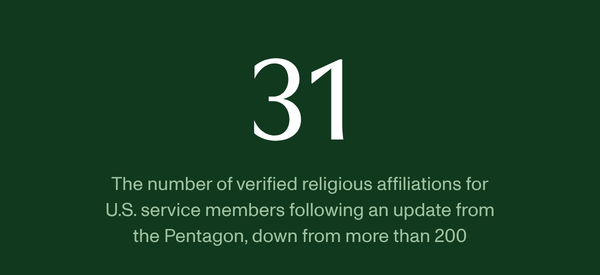
Text on a dark green background: "31" above a description about verified religious affiliations for U.S. service members, reduced from over 200 by the Pentagon.

Trust falls

Podcast setup on a wooden desk with a laptop, microphone on an arm, headphones, audio mixer, and a potted plant.As AI-generated content floods the internet, the bar for authentic communication keeps rising. For brands investing in paid partnerships with independent journalists, that shift has real consequences. Aaron Golds, who leads FGS Global's Media Planning & Placement team, recently moderated a panel discussion on the state of independent media with Mosheh Oinounou, Alex Heath, and Rachel Bade – three prominent journalists who left legacy outlets to build their own platforms. Here are the key takeaways:

  • AI is raising the floor on what authentic looks like. As generated content becomes ubiquitous, audiences are developing sharper radar for what's real. Sponsored content that feels scripted or hollow actively damages both the journalist's and the brand’s credibility.

  • The tech creator space is a cautionary tale. The explosion of tech-focused independent journalists has produced a parallel explosion of brand partnerships where questions are pre-approved and edit rights handed over. Audiences see straight through it, and they say so in the comments.

  • Editorial independence is the strongest asset. Original reporting built on human relationships, genuine editorial judgment and an audience that trusts the voice delivering the message cannot be manufactured. Brands that treat a journalist's independence as an obstacle to the partnership have misunderstood what they're buying.

  • The barbell effect has implications for brand strategy. AI is hollowing out the middle of media – generic, formulaic content that could already be replicated. Paid partnerships with credible independent journalists sit firmly outside that zone, but only as long as the partnership respects what put them there.

  • Transparency is an increasingly competitive advantage. Audiences have come to accept that independent journalism is a business. Clear, natural disclosure of sponsored content reinforces that trust rather than undermining it.

Pitching in

Reporter holding a notepad and pen, with two microphones labeled "news," prepared for an interview or press event.When two organizations share a story worth telling, a joint pitch can generate coverage neither could earn alone. Our colleagues at the Health Media Insights newsletter recently took a closer look at what it takes to make one land:

  • Weigh the pros and cons. Joint pitches attract reporters through greater name recognition, built-in perspective variety, and a more dimensional story. But differences in organizational priorities and resources can make the process longer and more complex. Before committing, consider what the story genuinely gains from two voices – and whether the coordination lift is worth it.

  • Find common ground. A joint pitch needs a hook that is newsworthy and meaningful to all parties. A formal partnership announcement, a shared conference appearance, joint advocacy, or complementary data that neither organization could present alone are all strong candidates. Once the hook is identified, agree on non-negotiables, including the ideal story angle, messaging and positioning to ensure your pitch is as mutually beneficial to both organizations as possible.

  • Align on process. Both organizations need to be on the same page when it comes to identifying reporter targets, determining whether the pitch will be exclusive or embargoed, selecting spokespeople, and deciding who will take the lead on reporter outreach. Designating a single point person to manage coordination prevents momentum loss when questions arise.

  • Not every situation calls for a joint approach. If the story is just as compelling told alone, coordinated but separate pitches may serve each party better.

To sign up for Health Media Insights, email health@fgsglobal.com.

June 9, 2026
By Nedra Pickler, Irene Moskowitz and Erin Barth-Dwyer

Share

Want to see more of this in your inbox?