The UN General Debate Opens

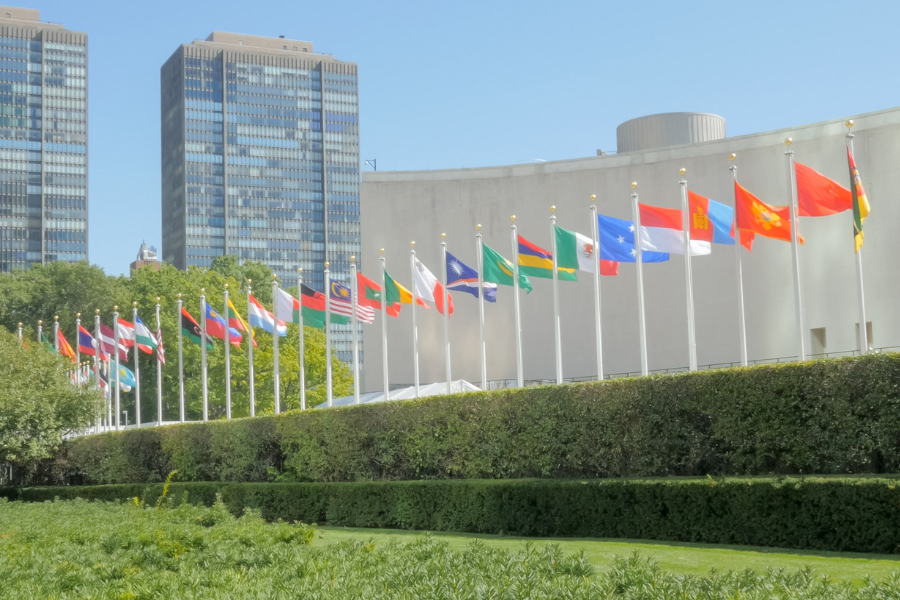
Flags of various countries displayed in a row outside a modern building, likely the United Nations headquarters, with skyscrapers in the background.

Beyond the Beltway: The UN General Debate Opens

The General Debate of the 81st session of the UN General Assembly opened today, with President Donald Trump's speech setting the dominant theme for speeches and sideline meetings this week: Iran. 

What to Watch:

  • Iran in the room. Iranian President Pezeshkian takes the podium tomorrow in his first address to the body since the war began. All eyes will be on whether any back-channel contact materializes between U.S. and Iranian delegations on the sidelines.

  • The Gulf's Iran test. The Gulf Cooperation Council states have been battered by Iranian attacks throughout the war. Now their leaders sit across from Trump to shape what comes next. Their tone will signal whether the bloc is pushing for a diplomatic off-ramp or hardening behind Washington's posture.

  • Netanyahu speaks to Israel, not the UN. With Israeli elections approaching, the prime minister will use his speech Thursday to play to the home crowd. Expect him to defend his record on Iran and Gaza and a pointed criticism of the UN itself.

  • Abbas on video, again. The U.S. denied Palestinian Authority President Mahmoud Abbas a visa for the second consecutive year. He will address the Assembly Thursday by video. President Trump's Board of Peace will meet tomorrow to brief governments on implementation progress, with the Palestinian Authority notably absent.

  • The empty chairs. Chinese President Xi Jinping will be at the White House Thursday. India, Germany, and South Africa sent deputies. Russian Foreign Minister Lavrov speaks Friday and will meet Secretary of State Marco Rubio on the sidelines. With major powers skipping New York for Washington, many nations will deliver speeches to a half-empty hall.

To learn more, contact our team at UNGA@fgsglobal.com or visit our UNGA dashboard. For tailored insights on sectoral, geographic, or scenario-specific risks, please reach out directly to geopolitics@fgsglobal.com.
By the Numbers

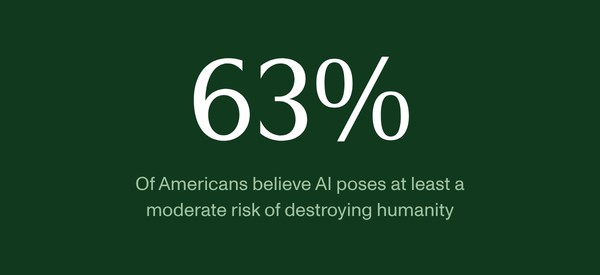
63% of Americans believe AI poses at least a moderate risk of destroying humanity, displayed on a dark green background.

Rise and Shine

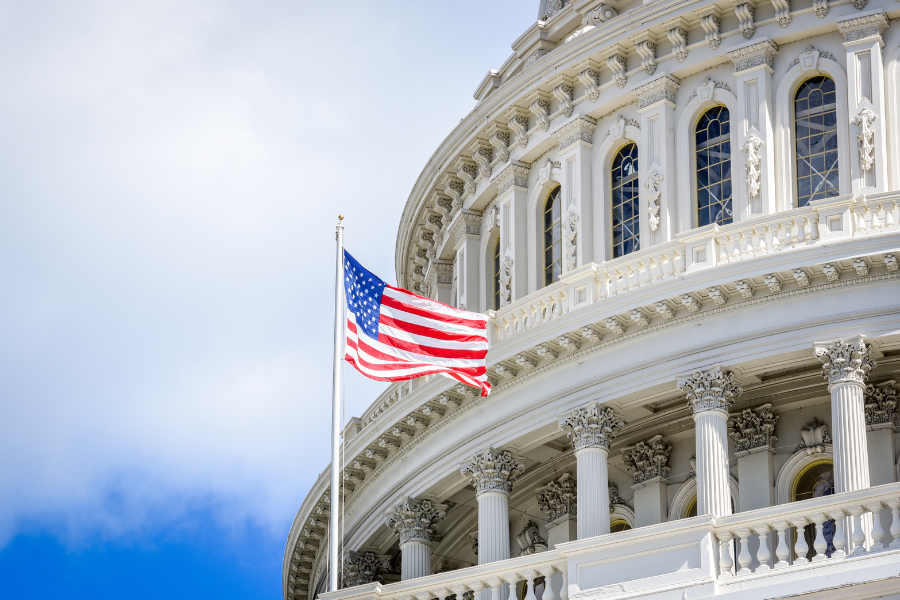
American flag flying in front of the United States Capitol building, showcasing its dome and columns against a partly cloudy sky.NOTUS, the Washington-focused political news site backed by Politico co-founder Robert Allbritton, relaunched earlier this month as The Washington Sun. Our Health Media Insights newsletter colleagues have outlined some key details about what it's becoming:

  • About the rebrand. As we covered in March, the outlet announced a significant rebrand and expansion, with plans to double its staff from 50 to 100 by the end of the year and broaden its coverage to include federal agencies, local news, and key issues like health care. Allbritton and editor-in-chief Tim Grieve say the newsroom will remain focused on its D.C. audience, hiring veterans from established Beltway outlets including The Washington Post, The Hill, Politico, and Axios.

  • What’s to come. Allbritton has indicated that subscriptions will eventually account for roughly half of revenue, with fees below the Post and in a strictly consumer format that differs from Politico Pro’s political intelligence service. The newsroom will also be monetized through direct advertising and events, though Allbritton said he is not inclined to run programmatic ads.

  • The bottom line. Pre- and post-rebrand, Allbritton and Grieve have underscored the site’s reach to high-level government officials, policymakers, and staffers alike. The September relaunch is a natural moment to engage those audiences by establishing reporter relationships and offering relevant sources.

Pro tip for engaging amid the name change:  FirstLast@washsun.com, no dot between names.

For more, subscribe to Health Media Insights by emailing the team at health@fgsglobal.com.

Prim and Prompter

Silhouette of a human head overlaid with a cityscape and digital data, symbolizing the intersection of technology and urban life.Last week Microsoft published a draft Humanist AI Code of Conduct with the goal of using a final version to govern its first-party MAI models beginning in 2027. The document is open for public comment for five more weeks, creating a live opportunity to help shape emerging AI governance principles before they harden into de facto standards.

As industry debate over AI safety and the pace of development intensifies, FGS's AI Advisory team has been studying the Code closely. Five takeaways for leadership:

  • Control of AI systems is the key governance challenge. The central question boards should be asking is not only what AI can do, but whether people can remain meaningfully in charge as AI systems become more capable.

  • Human-in-the-loop should expand to human control. Governance must extend beyond simple human review, which can become a rubber-stamping exercise, to include the ability to interrupt, override, correct, or shut down AI systems.

  • Boards need to define their AI red lines. The code identifies prohibited areas that operators and users cannot override, including weapons and mass harm, offensive cyber operations, harmful manipulation at scale, and malicious deepfakes. Enterprises need their own equivalent list.

  • End-to-end accountability is necessary. AI governance requires a clear chain of accountability so responsibility can be tracked from the developer to the deployer to the end user.

  • The goal is greater human capacity, not just automation. The measure of AI should be whether it empowers human agency and decision-making – not only whether it creates greater efficiencies.

To learn more about what the Code means for your board's AI governance framework, reach out to FGS's AI Advisory team.

September 22, 2026
By Nedra Pickler, Irene Moskowitz and Erin Barth-Dwyer

Share

Want to see more of this in your inbox?