
ICE Across America

ICE Across America

ICE enforcement has surged across major U.S. cities since December, with workplace raids and community sweeps. Organizations in affected regions face operational, reputational and workforce risks. 

Leadership should tailor strategies to their specific exposure, stakeholder ecosystem and operational footprint—there is no one-size-fits-all approach. FGS Global’s immigration working group offers the following framework for organizations operating in cities experiencing heightened ICE activity: 

  • Be specific, not generic: If you communicate publicly, acknowledge what has actually happened, address concrete concerns and detail specific actions. Vague platitudes may draw public criticism.

  • Beware the “middle ground”: Sometimes, attempting to thread the needle with carefully neutral language that offends no one satisfies no one. Choose clarity over caution.  

  • Back it up with action: The most authentic response is concrete support for affected employees and communities, not just public statements. 

  • Segment stakeholder communication: Different stakeholders need different messages. Communications must be informed by an accurate read on public sentiment and political risk, which can rapidly translate into business risk. 

  • Test for authenticity before speaking: Can you point to concrete actions? Are you prepared for scrutiny of your own practices? Can you sustain commitment beyond this moment? If not, reconsider speaking publicly. 

  • Recognize the limits of corporate voice: Your organization cannot solve immigration policy through statements. You can support affected employees, invest in communities and advocate strategically for reform. Focus on what you can actually influence. 

  • Build crisis readiness, not just crisis response: Develop protocols, train spokespersons, pre-draft statements and conduct tabletop exercises before you need them. 

  • Measure what matters: Track employee sentiment, retention, operational continuity and stakeholder alignment. 

Join us for live webinar discussion of ICE enforcement, business risks and advocacy opportunities with Rebecca Shi, CEO of the American Business Immigration Coalition, this Thursday, February 5 from 1:00-1:30 PM ET. 
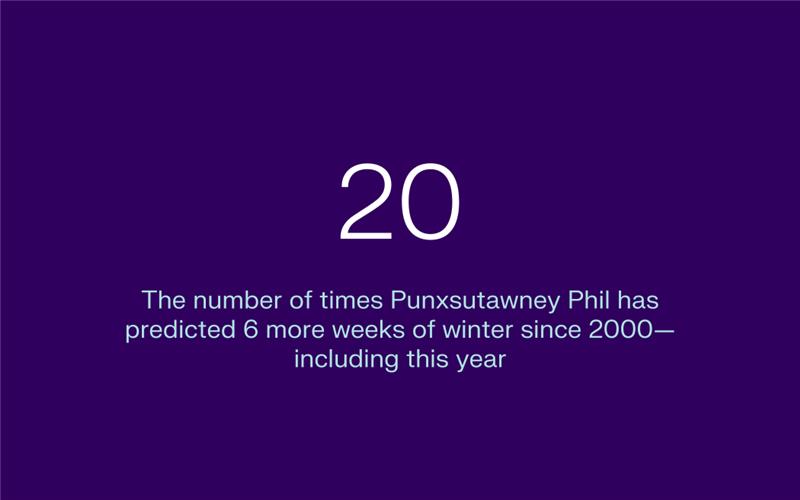
By the Numbers

Moderation Momentum

Regulators worldwide are turning up the heat on AI-powered platforms, making digital safety and responsible AI use non-negotiable for tech leaders and users alike. Across the EU, UK, France and Australia, authorities are intensifying scrutiny of AI-powered platforms like TikTok and X’s Grok. The EU is demanding greater transparency and accountability under the Digital Services Act, threatening hefty fines for failing to address content moderation, misinformation and child safety.

Grok, in particular, has come under fire for generating explicit deepfake images targeting women and children. Investigations are underway from Australia’s eSafety Commissioner, the UK’s Ofcom and French lawmakers, while the U.S. Senate is looking to combat deepfakes with the new Defiance Act; all are responding to a rise in digital harassment and manipulated images spreading online as they recognize that current safeguards aren’t keeping up with the rapid evolution of generative AI.

This coordinated regulatory push is a clear wake-up call for tech platforms and their partners. The expectation is now for proactive transparency, upgraded safety measures and responsible risk management. For those building or using these platforms, digital safety and responsible AI use are quickly shifting from being optional to something that must be front of mind. 

For more like this, subscribe to FGS Global’s Digital Insights newsletter.

Breach of Trust

Cyber-attacks are escalating in scale, cost and complexity, with growing consequences for reputation, operations and leadership. As digital threats become more sophisticated and more visible, proactive crisis planning and credible communication have become essential to protecting stakeholder trust.

Global cybercrime costs are projected to reach $23 trillion by 2027, driven by remediation expenses, business disruption and reputational damage. Threat actors are increasingly targeting high-value organizations and complex ecosystems, amplifying both the frequency and public impact of cyber incidents. Several factors are driving this new threat landscape: 

  • Supply chains are a key vulnerability. Major breaches often start with a single vendor. Attacks on one link in the supply chain can trigger operational chaos and reputational fallout across entire networks. Attacks on identity and brand bring just as much reputational risk and carry more long-term effects.

  • AI is accelerating cyber threats. Attackers are using AI-powered tools to make breaches faster, more precise, and harder to detect. According to BCG’s 2025 CISO survey, 80% of CISOs rank AI-powered cyberattacks as their top concern, with social engineering and AI-enabled fraud rising sharply.

  • Information spreads instantly. Details of cyber incidents now spread rapidly on social media, industry forums and the dark web – often before companies can respond. Early, truthful communication is essential to contain reputational risk and control the narrative.

To learn more about our Crisis & Issues Management team, visit our website. 

February 3, 2026
By Nedra Pickler, Irene Moskowitz and Erin Barth-Dwyer

Share

Want to see more of this in your inbox?