What We're Watching in Food & Ag - Week of September 28

Driving the Week

The Make America Healthy Again movement held its second annual MAHA Summit in Washington on Tuesday, bringing together the Trump Administration, MAHA organizations and followers, and corporate stakeholders for a day of panels on food, agriculture, and chronic disease – though outside observers noted a striking shift in the gathering’s tone and composition from its grassroots origins.

  • As noted by The Hill, many attendees and longtime believers feel the MAHA movement is selling out.

  • “Nothing screams medical freedom like UnitedHealth, Elevance Health, Walmart, GRAIL, ResMed, Compass Pathways, Definium Therapeutics, Hims & Hers, Noom, Advocate Health, Sutter Health, Anthropic and OpenAI,” quoted Robert Malone, a MAHA activist and former member of the Centers for Disease Control and Prevention’s (CDC) vaccine advisory panel.

On the MAHA agenda inside the U.S. Department of Agriculture (USDA), Secretary Brooke Rollins highlighted Supplemental Nutrition Assistance Program (SNAP) restriction waiver reforms, new stocking standards, and the agency’s regenerative agriculture grant program. 

  • The Secretary’s remarks on making SNAP “healthier” landed against a live policy backdrop. According to Bloomberg Law, Nebraska has submitted a new SNAP waiver request after its initial waiver was vacated under a federal court ruling in June.

Speaking about what the MAHA movement describes as its winningest policy deliverables, Acting U.S. Food & Drug Administration (FDA) Commissioner Kyle Diamantas and U.S. Department of Health & Human Services (HHS) senior advisor Calley Means pointed to the new Dietary Guidelines for Americans, the proposed GRAS loophole closure, and a post-market chemical review process as the movement's biggest policy wins to date.

  • Means argued that MAHA has succeeded in making chronic disease part of the mainstream policy conversation.

The summit closed with a fireside chat between Vice President JD Vance and HHS Secretary Robert F. Kennedy, Jr., who discussed ice cream, per USA Today, as well as how AI can help make HHS more efficient and empower the American people to move away from a dependency on government-determined experts and monopoly on knowledge.

With the midterms around the corner, policy wonks will be watching to see if MAHA can convert on policy wins to deliver votes for Republicans – or if Democrats can be successful in making further inroads with the MAHA movement.

  • Just this week, The Washington Post explored how candidates, like Michigan Senate candidate Abdul El-Sayed, are courting the MAHA base.
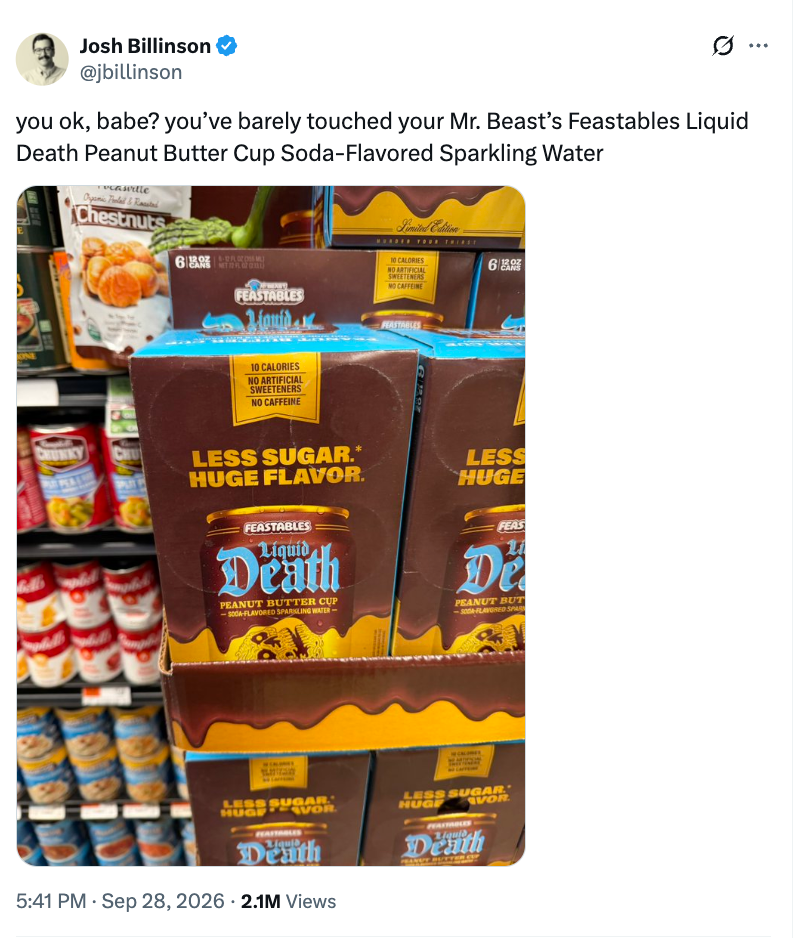
Post of the Week

DC Brief

While Congress considers the future of SNAP in the farm bill, major administrative changes to the program are taking effect this fall:

  • GOP Senators Push Back on Stocking Standards: A group of 12 Republican senators, led by Sens. Jim Justice (R-WV) and Roger Marshall (R-KS), sent a letter to Agriculture Secretary Brooke Rollins this week urging a six-month delay to the new SNAP retailer stocking mandate taking effect November 4. Echoing a similar letter sent by retailers in August, the lawmakers warned that without a delay, tens of thousands of small-format retailers could lose their SNAP authorization overnight, Politico reported. Secretary Rollins defended the November deadline at the Make America Healthy Again Summit on Tuesday, framing the expanded requirements as a vital step to ensure low-income families have access to real food.

  • ABAWD Work Requirements: Following the expiration of previous pandemic-era waivers, strict new work requirements for Able-Bodied Adults Without Dependents (ABAWDs) triggered on October 1, according to US News. In California, regional waivers are phasing out by October 31, when the entire state will be under the federal mandate requiring 20 hours of work or training per week to maintain SNAP benefits.

Quick Bites

Protein check on aisle two. Reporters and editors at The New York Times spent a week chronicling all the protein marketing in foods they came across in their daily lives – spanning bodegas, gas stations, grocery stores, warehouse clubs, coffee shops and chain restaurants.

  • According to NIQ, a marketing research firm, there are 37,232 products in stores carrying front-of-package protein claims which fueled $90 billion in consumer spending on these products over the last year.

  • Strong company. Headlines this week alone cited consumer demand for protein as driving corporate restructuring at cheesemaker Saputo per Food Dive, Hormel's acquisition of a value-added processor of chicken products according to the Wall Street Journal, as well as the introduction of new products via Quartz including Cheez-It Protein and Goldfish Protein (joining a long list of protein-enhanced products like Doritos, Kraft Mac & Cheese, and Eggo waffles).

Food for Thought

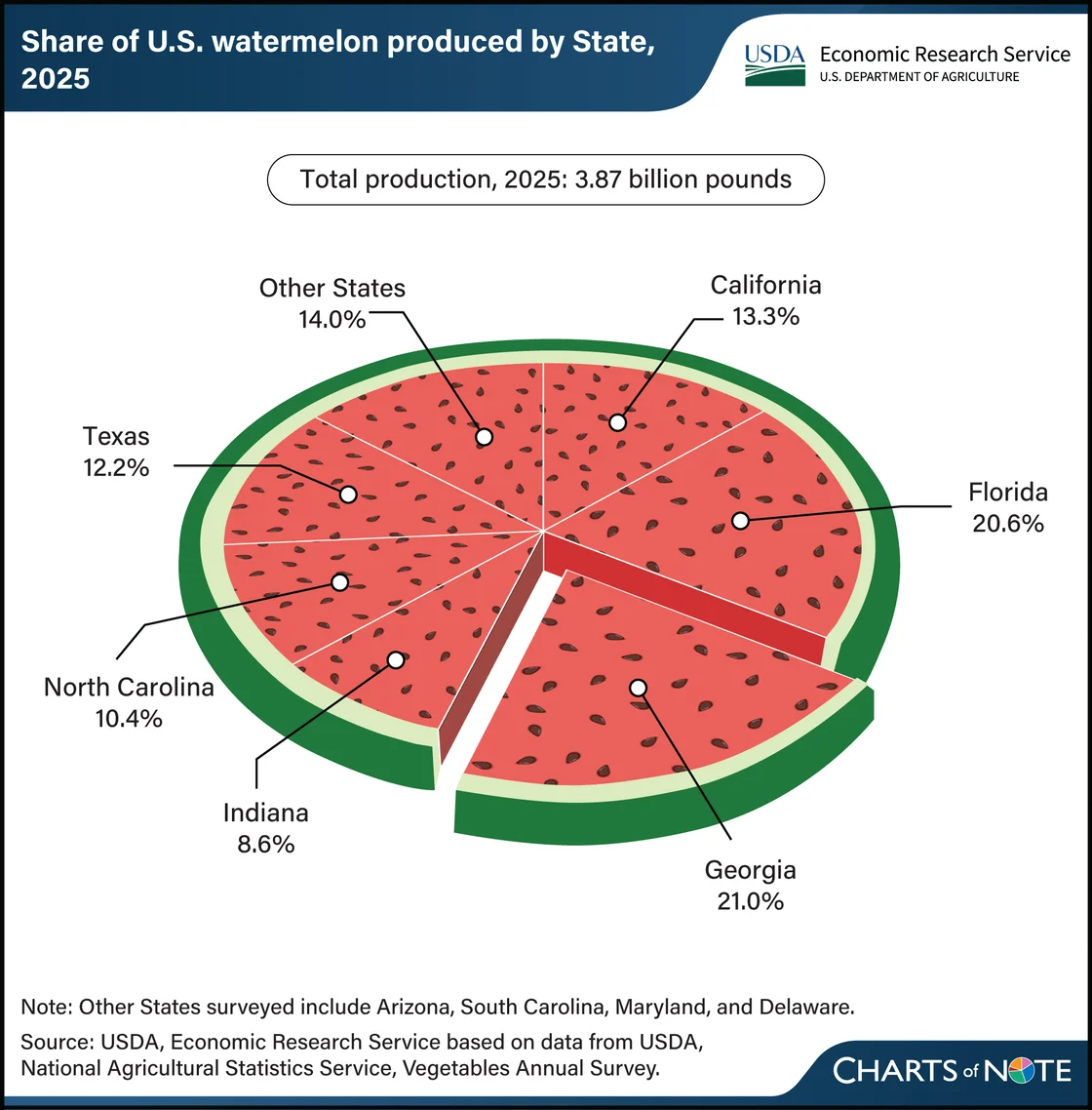
Watermelon has become one of the biggest slices of America's fresh fruit market, per USDA’s Economic Research Service.

  • Watermelon ranked third in U.S. fresh fruit per capita availability in 2024 (behind only bananas and apples), with just over 15 pounds available per person.

  • The U.S. produced 3.87 billion pounds of watermelons in 2025 across more than 100,000 acres. Georgia topped all states with 813 million pounds (21% of total production), narrowly surpassing Florida (20.6%).

  • Domestic production runs from spring through early fall, with shipments peaking in July. Watermelon imports to the U.S. fill the gap during off-peak months and totaled 1.8 billion pounds in 2025.

September 28, 2026

Share

Want to see more of this in your inbox?