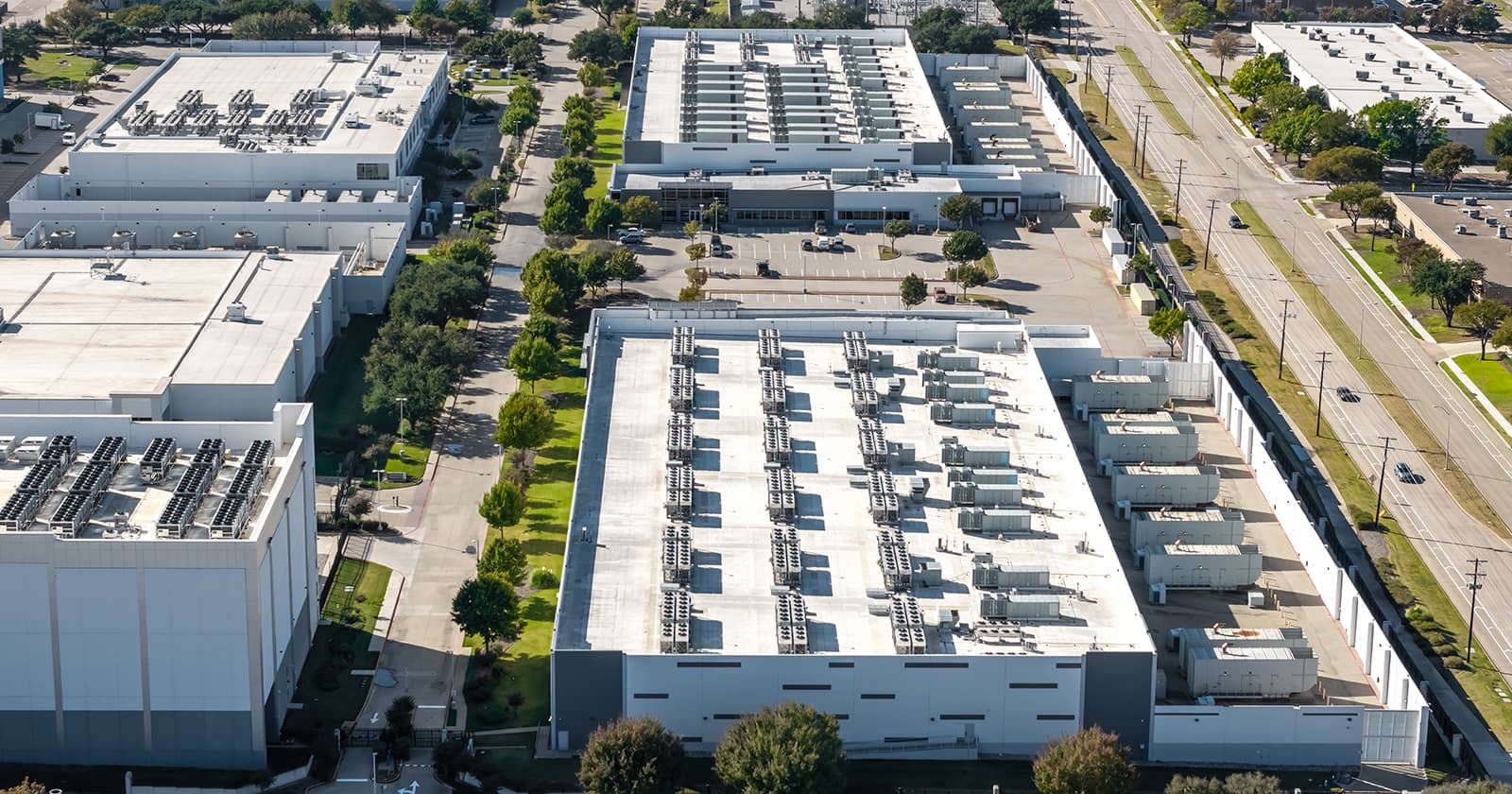
As CERAWeek 2026 convenes in Houston, the explosive growth of AI is pushing the energy sector to center stage in the global theatre of economic and geopolitical discourse. Historic energy demand from AI data centers is propelling these former back-office utilities to the front of debates around energy strategy, economic growth, geopolitical dominance, and everyday pocketbook and community development issues.
The deployment of AI infrastructure is no longer a purely technical or financial challenge, but a profound public affairs and stakeholder management imperative. To navigate this landscape, leaders must master three distinct but interconnected domains: the geopolitical race for AI supremacy, the structural transformation of the U.S. power grid, and growing affordability and community development concerns. Engaging these three trends is necessary to secure the political, energy, and social licenses needed to build the digital infrastructure of the future.
The geopolitical race for AI supremacy
The buildout of data centers is the primary physical constraint on the global race for AI leadership. In 2026, computational capacity has become a key metric of competitiveness. The Trump Administration has been explicit: "data center infrastructure is the foundation of the internet, cloud computing, and AI, and supports our economic and national security."[i] The July 2025 Executive Order on Accelerating Federal Permitting of Data Center Infrastructure established a similarly clear policy mandate, stating "we must ensure that the United States remains the global leader in the development and deployment of artificial intelligence."[ii]
The competition is global and capital-intensive. For example, India is targeting over $200 billion[iii] in infrastructure investment by 2028, China is aggressively expanding its compute clusters through state-directed investment, and the European Union is pursuing a €200 billion buildout to triple its data center capacity by 2030.[iv] Companies must now navigate a landscape where infrastructure decisions are scrutinized through a national security lens, and the ability to deploy capacity is increasingly tied to alignment with national industrial policy, programs, and oversight.
In the US, securing reliable, high-density power is a decisive factor in maintaining an edge. However, the speed of the “frenzy” for capacity is testing the limits of existing energy infrastructure and regulatory frameworks. Meanwhile, supply chain restrictions and tariffs on critical components—from advanced GPUs to specialized power equipment—added an estimated $6 billion in costs to AI data center construction in 2025.[v]
The structural transformation of the U.S. power grid
The data center boom has fundamentally altered the load growth trajectory of the North American bulk electric system. Summer peak demand is now forecast to grow by 224 GW over the next decade—a 69% increase over forecasts from just two years ago—with data centers accounting for the vast majority of this new load.[vi] This surge has shifted the energy conversation toward a mantra of "energy dominance" and the necessity of conventional baseload power.
The North American Electric Reliability Corporation (NERC) has warned of a growing mismatch: data centers can be developed in 18 to 24 months, while the generation and transmission infrastructure required to support them often takes five to ten years to deploy.[vii] To address this, we are witnessing a structural return to the industrial self-reliance of the early 20th century. Much like Alcoa once built its own hydroelectric dams to power aluminum smelting, today’s AI leaders are increasingly becoming their own utilities—co-locating generation to bypass a grid that struggles to keep pace with the speed of digital innovation.
In theory, on-site, self-generation allows data centers to bypass the transmission and distribution grids without burdening already strained grid assets and increasing costs to ratepayers; however, it can have unintended consequences. The high demand for power equipment and gas turbines by data centers can impact the ability of utilities and independent power producers to bring on new generation capacity to serve other industries and consumers. This challenge is compounded by the chilling effect utility scale renewable energy developers are experiencing, which previously were often the fastest form of new generation capacity. The challenge for data center development has become whether infrastructure can scale without tipping the energy ecosystem into instability or extremely high prices.
Affordability and community development concerns
The downstream impacts of the global AI race and a reordering of the energy sector serve as undercurrents for a growing opposition to data center development that is quickly being politicized. Whether it's anxiety about the future of AI, fear of increased electricity prices, or concern about environmental damage, data centers are facing new, increasingly organized, and vociferous pushback in the communities where they hope to build infrastructure. This pushback comes despite well-documented increases in local tax revenue to pay for increased services like schools, firehouses, parks, and community centers. Successful development now requires proactive engagement with a diverse set of stakeholders across a number of issues, including:
Electricity affordability: As utilities request rate increases to fund grid modernization, the political optics of infrastructure costs have intensified. Policymakers are under pressure to ensure that large-load customers contribute their fair share and mitigate rate increases for customers.
Resource management: The water-intensive nature of some AI cooling systems has become a focal point of local scrutiny. Across the US, data center water consumption is projected to rise significantly by 2030,[viii] often in places with existing water constraints.
Local sentiment: While data centers provide a stable tax base, they often face opposition related to land use, noise, and perceived lack of direct long-term employment compared to their physical footprint.
The current environment demands a shift from reactive permitting to a proactive stakeholder strategy. Navigating the new data center challenge requires a sophisticated understanding of how federal energy policy interacts with state-level utility regulation and local community sentiment.
Conclusion
The data center industry has emerged as the essential physical infrastructure of the AI era, serving as both a strategic anchor for technology ecosystems and a vital source of tax revenue for public infrastructure and communities. However, realizing these benefits is no longer a purely technical or financial endeavor; it is a test of the industry's ability to modernize the energy system, while navigating geopolitical competition, and hyper-local issues. Success in this new convergence will be determined by a disciplined stakeholder strategy.
To learn more about how FGS Global can support you contact FGSenergyinsights@fgsglobal.com.
[i] Ratepayer Protection Pledge Proclamation, March 4, 2026. Available at: https://www.whitehouse.gov/presidential-actions/2026/03/ratepayer-protection-pledge-proclamation/
[ii] Ensuring a National Policy Framework for Artificial Intelligence, December 11, 2025. Available at: https://www.whitehouse.gov/presidential-actions/2025/12/eliminating-state-law-obstruction-of-national-artificial-intelligence-policy/
[iii] Jagmeet Singh, “India bids to attract over $200b in AI infrastructure investment by 2028.” TechCrunch, February 17, 2026, https://techcrunch.com/2026/02/17/india-bids-to-attract-over-200b-in-ai-infrastructure-investment-by-2028/. Accessed on March 17, 2026.
[iv] European Commission, “Continent AI Action Plan,” pages 3, 4, April 9, 2025. Available at: https://commission.europa.eu/topics/competitiveness/ai-continent_en
[v] Anna Shedletsky, "AI Data Centers Have Paid $6B+ In Tariffs In 2025 — A Cost To U.S. AI Competitiveness," Forbes, December 10, 2025, https://www.forbes.com/sites/annashedletsky/2025/12/10/ai-data-centers-have-paid-6b-in-tariffs-in-2025---a-cost-to-us-ai-competitiveness/
[vi] North American Electric Reliability Corporation, "2025 Long-Term Reliability Assessment," page 10, December 2025, https://www.nerc.com/globalassets/our-work/assessments/nerc_ltra_2025.pdf
[vii] North American Electric Reliability Corporation, "Characterization and Risks of Emerging Large Loads," July 2025, pp. 16-17, https://www.nerc.com/globalassets/who-we-are/standing-committees/rstc/whitepaper-characteristics-and-risks-of-emerging-large-loads.pdf.
[viii] Shaolei Ren et al., "Peak Water Demand of U.S. Data Centers," arXiv preprint (2026), cited in "US Data Centers Could Require as Much Water as New York City by 2030, Study Shows," Gizmodo, March 6, 2026, https://gizmodo.com/us-data-centers-could-require-as-much-water-as-new-york-city-by-2030-study-shows-2000730811;