Boosting the yen will be back on the ‘To Do’ list soon

The Macro - Boosting the yen will be back on the ‘To Do’ list soon

Insight:  In the most significant coordinated currency action in nearly three decades, the US and Japan jointly purchased more than $60 billion of yen last week — rather unconventionally selling euros rather than dollars to fund the operation. A notepad photographed in front of Treasury Secretary Scott Bessent at a cabinet meeting read "To Do: Buy Japanese Yen $5-10 bil." Bessent cited two reasons for the move: the weak yen is stoking inflation inside Japan by raising the cost of energy imports for a country that imports 90% of its fuel; and the risk that sustained yen weakness could trigger competitive devaluations across Asia, echoing the 1997-1998 currency crisis. However, Washington’s other (real) motivation is that its Pacific ally is the largest foreign holder of US Treasuries, and a Japan forced to keep selling those holdings to fund a unilateral yen defense would push up US bond yields and, with them, the government’s own borrowing costs.

Impact: The intervention has moved the yen from a 40-year low of around ¥164/$ to roughly ¥157/$ — and it has largely stalled there. This is consistent with what history and academic research suggest about currency interventions: they can slow or briefly reverse a move, but they rarely fix it. The American Enterprise Institute noted bluntly that Japan has repeatedly added its name "to the list of failed foreign exchange intervention experiments." An NBER study found that official interventions can strengthen a currency for hours or days, but the effects do not last. The classic illustration is Black Wednesday in September 1992, when the Bank of England spent over £27 billion defending sterling against George Soros and other speculators — and was ultimately forced to devalue. This proves that market forces will overwhelm official firepower if the economic fundamentals are out of whack. Today’s yen is structurally weak because real interest rates remain deeply negative at around minus 0.75%, while US rates are elevated, making the carry trade highly profitable. Without a meaningful narrowing of the US-Japan interest-rate differential, the gravity pulling the yen lower is likely to reassert itself.
Asia by numbers – 83.5%

The world’s matcha fixation is now showing up in Japan’s trade data. Green tea exports surged 83.5% in the first half of 2026, as demand for everything from matcha lattes to desserts outpaced supply and pushed prices to record highs. The craze has left Japan with a distinctly modern problem: how to produce enough centuries-old tea for everyone’s morning order.

The Micro – Yuan Step Closer

Insight: The China Securities Regulatory Commission (CSRC) has announced plans to expand the Southbound Stock Connect with Hong Kong, adding yuan-denominated dual-currency stock counters and real estate investment trusts (REITs) to the cross-border trading link, with technical frameworks now in active preparation on both sides of the border. The top securities regulators have also committed to deeper cooperation on indexes, ETFs, and futures market linkages — positioning Hong Kong as the primary channel for mainland investors seeking international exposure. This comes against a fraught regulatory backdrop in China: a crackdown on online brokerages, tightened bank account oversight, and a high-profile corruption probe into former CSRC Vice Chairman Fang Xinghai, which have been raising questions about Beijing's appetite for financial openness.

Impact: For international investors and financial institutions, the Stock Connect expansion signals continued institutional commitment to the Hong Kong-mainland corridor even as domestic regulatory pressure intensifies. The inclusion of REITs and yuan counters addresses a longstanding friction point — the currency mismatch that has suppressed adoption of the Hong Kong Stock Exchange’s dual-counter model since its 2023 launch. With Hong Kong listings at a six-year high, further integration could accelerate both southbound capital flows and the internationalisation of the yuan in cross-border securities trading. Companies with exposure to Hong Kong-listed assets, mainland capital markets, or China-linked financial infrastructure should monitor the technical framework rollout closely. 

News you can use – Geo-pole position: Malaysia’s F1 comeback

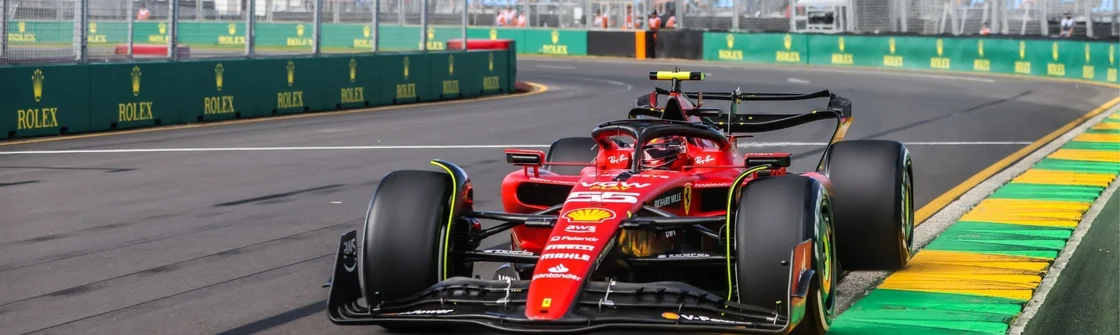
Insight: Formula 1 is rerouting back to Malaysia’s Sepang circuit for the first time in nine years — but not as the Malaysian Grand Prix. Sepang will instead host the displaced Bahrain Grand Prix in October as ongoing conflict in the Middle East continues to disrupt this season’s racing calendar. Malaysia walked away from the sport in 2017 as hosting fees and licensing costs grew but kept the circuit to international racing standards through MotoGP. That has allowed it to step in at short notice, with Bahrain reportedly covering the main costs and Malaysia contributing only $3.9 million towards track maintenance.

Impact: Malaysia has been given an unusually low-cost opportunity to test whether F1 can still deliver tourism, spending, and global visibility without committing to an expensive multiyear contract. The timing is particularly favourable: the race falls during Visit Malaysia Year and one week before the Singapore Grand Prix, creating the prospect of a two-stop Southeast Asian F1 circuit for travelling fans. More broadly, it shows how countries with ready infrastructure and hosting experience can benefit when global events are forced to relocate. Malaysia may have left F1 because the economics no longer worked; geopolitics has now brought it back on far better terms.

If you listen to one thing this week - The feet that brought Cambodia’s stolen gods home

In 2011, the Duryodhana, revered as one of the most remarkable stone sculptures from the ancient Khmer Empire, arrived for auction at Sotheby’s New York without its feet. Investigators would later find its matching remains still embedded in the soil at a temple complex near Siem Reap dating back to the 10th century. The discovery exposed an industrial-scale trafficking network dating back to Cambodia’s civil war and subsequently triggered the return of over 300 Khmer artefacts to date, while forcing museums, auction houses, and private collectors to reckon with how little they may actually know — or have neglected to ask — about provenance. The success of Cambodia’s restitution campaign aside, each return also carries a deeper meaning as it looks to rebuild a national memory fractured by war.

Listen to Bloomberg’s Big Take Asia podcast episode on the case here.

August 7, 2026

Share

Want to see more of this in your inbox?