US-China summit pairs hope with realism

The Macro – US-China summit pairs hope with realism

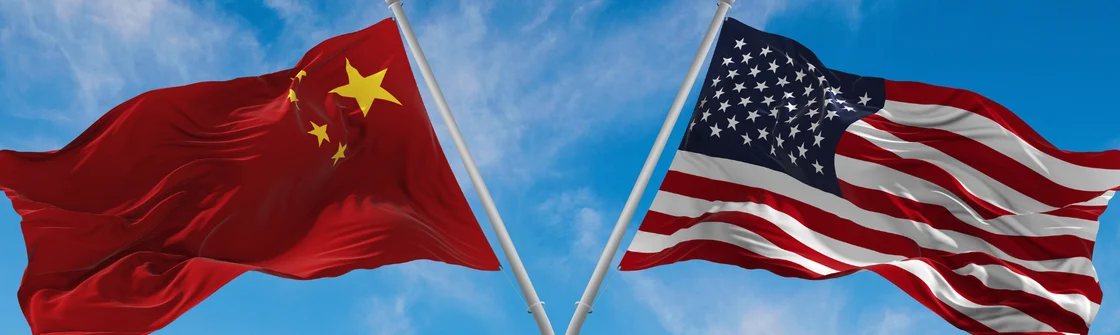
Insight: President Donald Trump's first visit to the Chinese capital since 2017 is the most significant bilateral encounter since the Busan trade truce of October 2025. That earlier agreement froze tit-for-tat tariff escalation in exchange for Chinese concessions on critical mineral exports, and both sides are expected to reaffirm those commitments this week, with the possible addition of Chinese purchase agreements covering US agricultural goods and aircraft. Several American CEOs have accompanied Trump to Beijing, signalling that market access and commercial fairness are on the agenda. The harder questions - semiconductor export controls, the Iran war, and Taiwan - are also on the table, though expectations are deliberately modest. Beijing has signalled willingness to offer concessions in low-sensitivity sectors while seeking to leverage Trump's appetite for headline deals to gain broader access to advanced U.S. technology, including chips and aircraft engines, though Washington's negotiators will resist this.

Impact: For businesses, the summit is best understood as stabilization, not resolution. A reaffirmed trade truce would extend a fragile but commercially useful détente; a formal trade dialogue would give companies a more predictable framework than the current pattern of executive improvisation. But the structural constraints have not moved: China controls global rare earth refining capacity; semiconductor export controls retain broad bipartisan support in Congress; and tariffs remain a live friction point despite legal setbacks for the White House. The Iran war reshuffles the leverage calculus further: Beijing is unlikely to spend real diplomatic capital helping Washington reopen the Strait of Hormuz, and the US will respond with a harder line on sanctions compliance, narrowing the space for commercial agreements on critical minerals and market access. Companies should watch for announcements carefully - Chinese investment in U.S. manufacturing and any softening of semiconductor restrictions would be the genuinely market-moving outcomes - but should plan for a relationship that remains structurally competitive, with pockets of managed cooperation at the margins. 

Asia by numbers – $29 billion

Thailand is investing $29 billion across six projects, with TikTok's $25 billion data infrastructure expansion leading the way. The scale reflects Bangkok's ambition to become Southeast Asia's next digital hub, but it raises a harder question: Does replicating data center infrastructure country by country, further from the users it serves, actually make sense? Cross-border data flows remain patchy, and digital sovereignty rules are tightening. Whether the investment approvals translate into operational reality will hinge on Thailand's ability to navigate those gaps.

The Micro – The Philippines’ global rise meets a domestic power struggle

Insight: Philippine Vice-President Sara Duterte, daughter of former president Rodrigo Duterte and a likely 2028 presidential contender, has been impeached by the lower house of parliament over allegations including misuse of confidential funds, unexplained wealth, bribery, corruption and threats against President Ferdinand Marcos Jr. But the trial has already been thrown into uncertainty after a surprise Senate leadership coup put a long-time Duterte ally in charge of the chamber that will hear the case. What looks like a constitutional process is quickly becoming a proxy battle between two of the Philippines’ most powerful political families, with control of the Senate itself now unstable and potentially decisive in determining how quickly — or aggressively — the trial moves forward.

Impact: The Philippines is being pulled in two directions at once: outwardly, it is becoming a much more important security partner for the US, Japan, and Australia; domestically, its politics are sliding back into a bruising Marcos-versus-Duterte feud. That tension matters. Allies are betting on Manila to play a bigger role in the South China Sea and the wider Indo-Pacific, but a drawn-out impeachment battle could turn foreign policy into another front in the 2028 succession fight. The risk is not that the Philippines suddenly changes course, but that its growing strategic importance is undermined by political instability at home.

News you can use – Japanese crisps adopt crisis packaging

Insight: Calbee, Japan's most popular crisps brand, announced this week it will switch 14 flagship products to black-and-white, reduced-imagery packaging, citing import disruptions to the crude oil and naphtha used in printing ink solvents as a result of the Middle East conflict. The move drew an immediate government rebuttal, with deputy chief cabinet secretary Kei Sato insisting authorities had "not received any reports of immediate supply problems at this time", a public contradiction that signals tension between Calbee's messaging and Tokyo's efforts to project stability amid the Iran war.

Impact: The episode has divided opinion, with some analysts suggesting the announcement bears the hallmarks of a PR stunt. "Deliberately going that far to generate buzz is a very proactive way of turning this situation to their advantage," said independent retail analyst Akihito Nakai. Whether genuine supply crisis or savvy repositioning, the campaign illustrates both the opportunity and the risk in getting ahead of your government on a politically sensitive shortage, a dynamic likely to grow more familiar as Middle East disruption continues to surface in unexpected corners of the Japanese economy. 

If you read one thing this week

Still want to know more about the Xi-Trump summit? FGS Global's experts from across our global network have shared their insights on what it means for businesses, covering different regions and perspectives.

You can read the report here.

May 15, 2026

Share

Want to see more of this in your inbox?