Crude Awakening

Stock market graph with red downward-trending candlesticks and numerical data, indicating a market decline.

Crude Awakening

The coordinated U.S.-Israeli strikes on Iran and the subsequent escalation across the Gulf have thrust global business into a new period of uncertainty, with the duration of disruption now the critical variable. While markets have so far avoided panic, the ripple effects are already being felt across energy, logistics and financial sectors.

FGS Global’s geopolitics experts have outlined the business implications as they currently stand:

  • Energy markets on edge: The closure of the Strait of Hormuz—gateway for 20% of global oil and 80% of Asian crude imports—has slashed tanker traffic, with major insurers suspending war risk coverage. LNG supply is also sharply curtailed, notably with Qatari production offline, sending European and Asian gas prices soaring by roughly 70%.

  • Supply chain and shipping disruptions: Maritime and aviation routes are under threat, with attacks on tankers and regional air hubs. Shipping costs and insurance premiums are expected to rise, and business travel faces ongoing hurdles. The State Department is facilitating charter flights from the United Arab Emirates, Saudi Arabia and Jordan for American citizens, and will continue to secure additional capacity as security conditions allow. They are assisting with limited commercial flights from Saudi Arabia, UAE, Oman and Egypt.

  • Muted market response—for now: Despite the turmoil, Brent crude remains stable and equities are only modestly down, reflecting confidence in U.S. supply, Chinese reserves and a swift resolution to the conflict. However, a protracted crisis could push oil prices toward $100/barrel and hit corporate earnings.

  • Corporate response: Energy and logistics firms are activating contingency plans. Financial institutions are emphasizing their ability to withstand the crisis. All corporates are stressing employee safety and continuity, with staff in the region advised to work remotely.

  • Sanctions & cyber threats: Heightened U.S. sanctions enforcement and the risk of Iranian cyber retaliation mean companies must reassess compliance and cybersecurity readiness.

For further guidance, reach out to our Geopolitical Advisory team at geopolitics@fgsglobal.com. 
By the Numbers

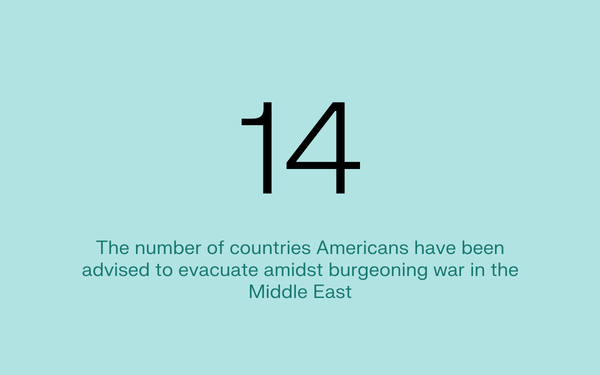
Number 14 and text advising Americans to evacuate 14 Middle Eastern countries amidst escalating conflict, on a light blue background.

Western Union?

Hands surrounding a glowing digital globe, representing the Earth, on a dark background, symbolizing protection and global connectivity.The U.S.-Israeli strikes on Iran have triggered a rapid and complex reshuffling of international alignments, with major powers and regional actors recalibrating their positions as the crisis deepens:

  • Western unity—with new nuclear overtones: The military operation has drawn firm support from key allies. Notably, France has invited European partners to participate in nuclear deterrence exercises for the first time, signaling a shift toward deeper EU defense integration. Germany also is stepping up its role, while the UK and other Western states back coordinated action and enhanced security cooperation.

  • Russia and China condemnation: Moscow and Beijing have sharply criticized the strikes. Russia’s President Putin labeled the operation a “cynical violation” of international law, while China called for an immediate ceasefire and accused the U.S. and Israel of undermining nuclear negotiations. Both are leveraging the crisis to assert their roles as counterweights to Western influence.

  • Regional realignment: Gulf states—including Saudi Arabia, the UAE and Qatar—have condemned Iran’s retaliatory attacks and reaffirmed collective self-defense, even as energy infrastructure and shipping face direct threats. Turkey is positioning itself as a potential mediator, while Lebanon’s government has moved to restrict Hezbollah’s activities after Israeli strikes.

  • Global economic caution: Japan and other Asian economies are emphasizing energy security and reserve capacity, while Venezuela has notably softened its support for Iran, reflecting the unpredictable realignments underway.

Future Imperfect

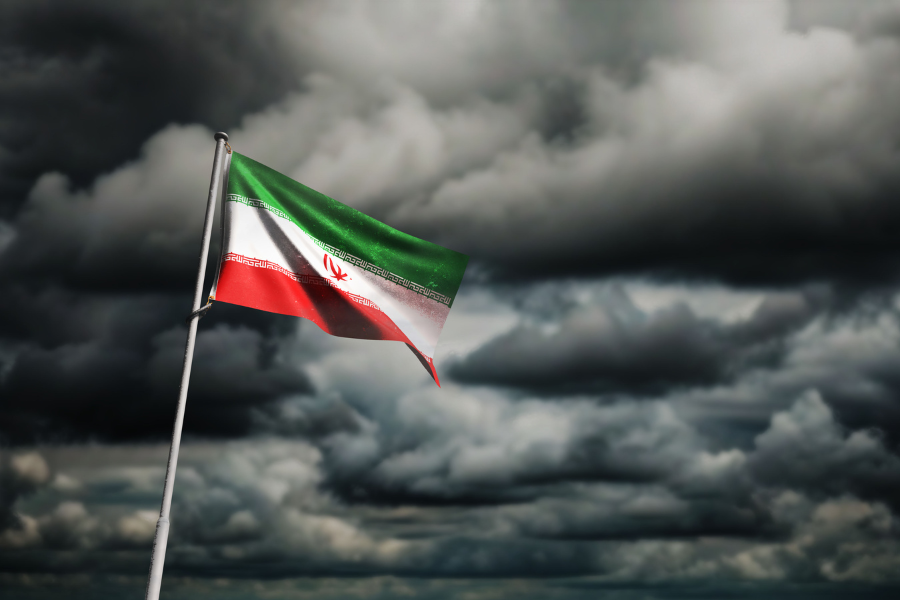
Iranian flag waving against a dramatic, cloudy sky, featuring dark, stormy clouds and the green, white, and red colors of the flag.With the death of Supreme Leader Khamenei and a leadership council now at Iran’s helm, the country stands at a crossroads. The next three to six months will hinge on two critical factors: the cohesion of Iran’s elite and the escalation of external conflict. The range of possible outcomes is wide and each carries profound implications for regional stability and global business.

FGS Global’s Alternative Futures analysis explores four distinct possibilities: 

  • Managed pressure: If Iran’s elite quickly consolidates around a new leader, expect continued internal repression, tight regime discipline and limited proxy attacks—keeping the crisis in a “gray zone” but avoiding wider war.

  • Rally around the flag: A successor could exploit the crisis to further centralize power and escalate conflict, with the IRGC deepening its influence. This scenario risks broader regional confrontation and more severe market disruption.

  • Slow fracture: If leadership consensus proves elusive, Iran may see growing elite rivalry, uneven security control and sporadic protests. The regime would persist but appear increasingly brittle, raising the risk of miscalculation.

  • System unravels: The most destabilizing outcome would be a drawn-out succession struggle coinciding with intensified external attacks. Fragmentation among Iran’s power centers could lead to security breakdowns, mass unrest and unpredictable regional interventions.

Wildcard events such as a major external strike, sudden elite defections or mass protests could rapidly shift the outlook. For global businesses, scenario planning and agility will be essential as Iran’s future remains deeply uncertain.

March 3, 2026
By Nedra Pickler, Irene Moskowitz and Erin Barth-Dwyer

Share

Want to see more of this in your inbox?