Sowing The Seeds of Anti-Trust

Aerial view of a red tractor plowing a dark soil field, adjacent to vibrant green and yellow crop fields.

Sowing the Seeds of Anti-trust

With affordability emerging as a central theme for the 2026 midterms, both parties are intensifying scrutiny of consolidation and anticompetitive practices across the food and agriculture sector. Companies should brace for heightened oversight, with Congress and regulators advancing multiple parallel investigations and legislative efforts. Our Antitrust Digest Newsletter colleagues have outlined what to watch:

  • Meat industry breakup legislation: Senate Democrats are preparing legislation to de-consolidate the meatpacking sector that would reportedly seek to reverse decades of horizontal integration by the “Big Four” meatpackers.  

  • Foreign influence and “greedflation”: Senate Majority Leader Chuck Schumer (D-NY) recently criticized the Trump administration for failing to address foreign influence and consolidation in U.S. agriculture, linking national security concerns to “skyrocketing” grocery prices. That’s a signal Democrats will frame food inflation as a corporate concentration issue ahead of the 2026 midterms. 

  • Pricing bias and Robinson-Patman enforcement: Republican senators, led by Judiciary Chair Chuck Grassley (R-IA), are urging renewed enforcement of the Robinson-Patman Act to protect small businesses from dominant chains. Separately, Senator Elizabeth Warren (D-MA) and Democrats have pressed the FTC to investigate alleged “pricing bias” by large consumer goods companies.

  • Fertilizer market price-fixing probe: The DOJ is reportedly investigating potential price-fixing in the fertilizer market, following calls from lawmakers and agricultural groups to examine whether dominant producers are keeping input costs artificially high.

With enforcement priorities shifting and new antitrust leadership in place, you can hear directly from Trump administration enforcers at our March 26 event in partnership with Semafor, Antitrust in Action 2026. For details and registration, visit fgsglobal.com/antitrust-in-action-2026.

By the Numbers

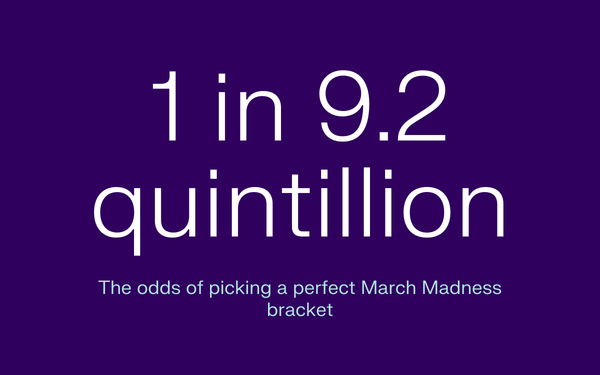
Text on a purple background reads: "1 in 9.2 quintillion - The odds of picking a perfect March Madness bracket."

Artificial Insecurities

Abstract image of padlocks and digital connections overlaid on blurred silhouettes, symbolizing cybersecurity and data protection.The same AI that promises to make businesses more efficient may also be making them more vulnerable. A new report from FGS Global and global cyber security and corporate intelligence firm S-RM predicts the wide-spread adoption of AI by global corporations could pose new cyber vulnerabilities if implemented too quickly and without appropriate guardrails. 

As boards consider the implementation of AI across their businesses, it can be a double-edged sword. While AI can drive efficiency and performance, creating non-human identities in the form of AI agents could inadvertently give attackers even greater access to a company’s systems and therefore present new reputational risks. 

At the same time, cybercriminals are learning which data types generate the most pressure for payment – including customer information, intellectual property, regulatory violations, and material that could trigger additional legal liabilities – and are using AI to rapidly categorize and weaponize what they've taken. The result is extortion tailored to maximize pressure, with specific, personalized leverage designed to make victims fear the consequences of non-payment.

With AI accelerating the attack life cycle, organizations now have dramatically less time to respond to a cyber incident before trust begins to erode. Businesses will therefore increasingly face a "speed paradox": communicate quickly to maintain trust, but risk acting on incomplete information, or wait for certainty and appear paralysed. In 2026, reputations will hinge on detection speed and the transparency, timeliness and accuracy of a company’s response. Preparing for how to manage the stakeholder fallout from an attack has never been more important.

Fool’s Gold-en Age?

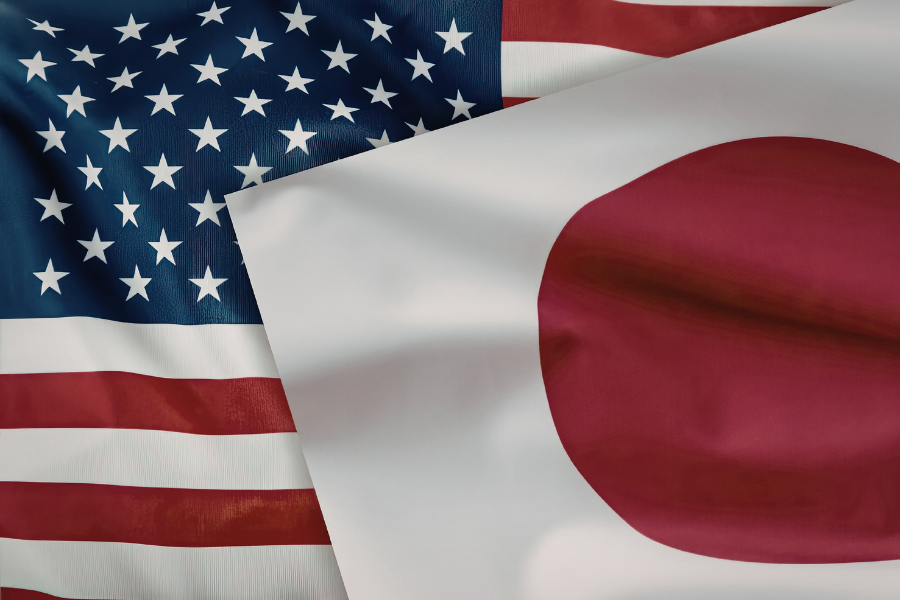
Flags of the United States and Japan, overlapping. The U.S. flag displays stars and stripes, while the Japanese flag features a red circle.Japanese Prime Minister Sanae Takaichi heads to the White House Thursday for a summit that could restore U.S.-Japan relations to their warmest point since the Trump-Abe "bromance" era. The meeting's success, however, will ultimately hinge on whether high-profile commitments can be translated into concrete projects.

Takaichi's visit builds on President Trump's October 2025 trip to Tokyo, where the two leaders signed a framework agreement promising a "New Golden Age" for the alliance. At its core was Japan's $550 billion investment pledge into the U.S. economy, secured in exchange for a reduction in tariffs on Japanese imports from 25% to 15%.

The agenda is broad. Takaichi is expected to address defense posture, trade, national security and cooperation on critical minerals and rare earths, while announcing several large new investment projects planned for next week.

Geopolitics are working in Takaichi’s favor. With Washington's global relationships under strain, Japan has a real opportunity to position itself as a uniquely reliable partner. Takaichi is also expected to reaffirm Tokyo's investment commitment, despite the tariff reduction it secured having since been ruled illegal by the US Supreme Court.

Trump is counting on Japan to drive U.S. job creation and industrial revitalization. But serious questions remain about how Japan will fund its pledge, the burden on Japanese taxpayers and whether Japanese companies will follow through amid concerns over U.S. regulatory complexity and labor shortages.

For more stories like this, subscribe to FGS Global’s Asia In Context newsletter.

March 17, 2026
By Nedra Pickler, Irene Moskowitz and Erin Barth-Dwyer

Share

Want to see more of this in your inbox?