The Summit View

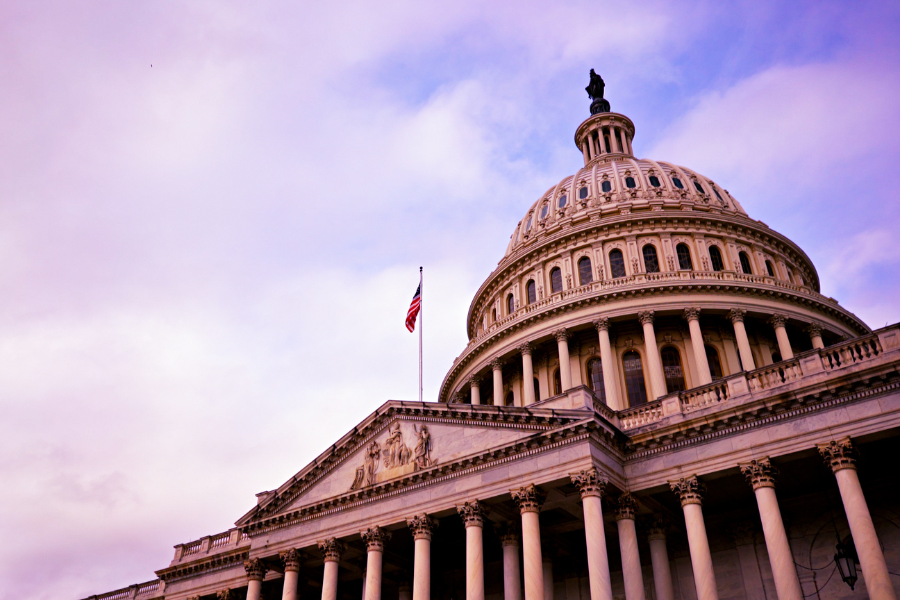
The U.S. Capitol building with its dome and columns under a cloudy sky, featuring an American flag on a pole.

Beyond the Beltway: The Summit View

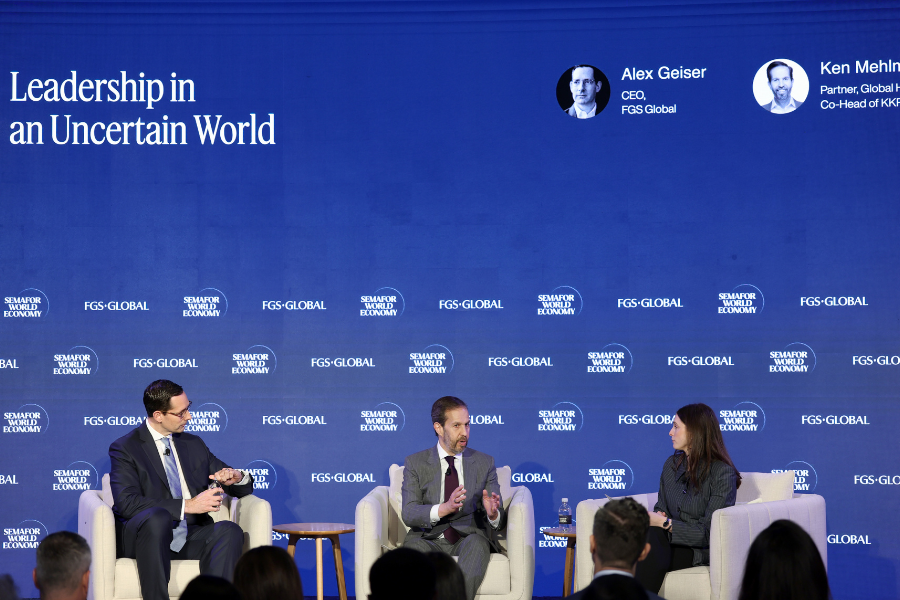
Last week, FGS partnered with Semafor for their second annual World Economy Summit in Washington. A sharp consensus emerged about how the operating environment for corporations has permanently shifted from optimization to resilience. 

What We Heard  

  • The pilot era for AI is over. The companies pulling ahead aren’t experimenting, they’re building. BCG Global Chairman Rich Lesser challenged CEOs to move from experimentation to execution and to ask how they are shaping the environment versus reacting to it. 

  • The IMF’s January baseline has not held up. There is a wide cone of economic uncertainty for the remainder of this year and into 2027. Citadel CEO Ken Griffin warned central bankers face an impossible choice between treating the inflation spike as transitory or hiking to re-anchor expectations. 

  • Allies are unbundling the U.S. relationship. They are refusing to let any single dispute or negotiation with the U.S. affect others. UK Chancellor of the Exchequer Rachel Reeves pushed for tariffs and non-tariff barriers reduced “both ways.” Spain’s Minister of Economy Carlos Cuerpo argued the U.S. trade relationship should be “treasured” separately from disagreements over Iran.  

  • Markets are mispricing geopolitical risk. Structural blind spots carry real consequences. At the same time, capital flows are moving faster than trade deals or security pacts. Companies that wait for diplomatic clarity before acting will be late. 

  • CEOs are now diplomats. A continuous presence in Washington is no longer optional. Active engagement is necessary to shift the policy conversation on issues that matter most to your business. 

This is the second installment of Beyond the Beltway, a new series from FGS Global's Geopolitics team offering timely analysis on global geopolitical developments. For tailored insights on sectoral, geographic or scenario-specific risks, please reach out directly to geopolitics@fgsglobal.com.  
By the Numbers

Framework or Freefall

At the Semafor World Economy Summit, FGS Global CEO Alex Geiser and KKR Partner and FGS Board Member Ken Mehlman offered a candid read on how CEOs are navigating a fundamentally changed operating environment. The consensus: Geopolitics has moved from background noise to a core business variable and the margin for error has shrunk.

Geiser said we’re living through a "Gutenberg 2.0" moment. Social media, radical transparency and algorithms that reward drama have compounded public distrust across every institution and every sector. A few takeaways:

  • On geopolitics: Boards are spending real time on it, and it's driving concrete decisions on supply chains, sourcing and where companies choose to operate. The assumption that capital moves freely and politics stays peripheral no longer holds.

  • On stakeholder pressure: The map has expanded well beyond shareholders. Employees, customers and governments all have expectations, and those expectations can conflict. If companies don't explain their reasoning, stakeholders will fill in the blanks.

  • On what good looks like: The companies navigating this well aren't reacting to every issue as it comes up. They have a clear internal framework for decision-making that gives them consistency, and they communicate it.

The bottom line: The environment isn't stabilizing. The question is whether your company is building the frameworks to operate in it.

For more on the themes raised at Semafor — and what they mean for your business — visit FGS Radar or reach out to fgsradar@fgsglobal.com.

Crisis is Kinetic

Wooden dominos fall, stopped by a paper figure of a person with a briefcase, on a blue background.In 2026, crises don't announce themselves. A deepfake goes viral on TikTok, bot networks amplify it on X, employees spiral in private Slack channels and regulators take notice — all before your communications team has convened. Traditional monitoring tools were built for a slower world.

Every company in every industry needs a crisis playbook. But more importantly, they need the monitoring infrastructure to know when to activate it. This infrastructure must be:

  • Adaptive: Capable of pivoting from routine monitoring to crisis response without manual reconfiguration

  • Intelligent: Leveraging AI not just for data collection but for pattern recognition, anomaly detection and predictive analysis

  • Actionable: Delivering insights that inform decisions, not just dashboards that display data

The organizations that thrive won't be those with the most data. They'll be those with the sharpest insights, delivered at the moment of maximum impact. Because when crisis is kinetic, monitoring and threat detection must be too.

To learn more, check out the latest thought leadership piece by Ben Decker, FGS Global Partner and Global Head of Threat Intelligence: “Digital Crisis is Kinetic.”

April 21, 2026
By Nedra Pickler, Irene Moskowitz and Erin Barth-Dwyer

Share

Want to see more of this in your inbox?