
The Art of No Deal

The Art of No Deal

The federal government is in its second week of a shutdown as the Senate remains at loggerheads over competing Republican and Democratic proposals to fund the government. While DC had gotten used to shutdown threats and brief funding lapses, this one could last a while. Here’s why:

  • Party leaders aren’t talking. Democrats are insisting Republicans address expiring Obamacare subsidies and recent Medicaid cuts in exchange for their votes. Republicans say no negotiations will occur until after Democrats vote to reopen the government. Without talks, there isn’t much hope for a resolution.

  • Both parties are confident they’ll win the messaging war. While recent polling suggests a larger percentage of the public blames President Trump and congressional Republicans, the margin is small (39% v. 30%). And with left-leaning groups cheering Democrats for “fighting back” and President Trump railing against the “Democrat-induced shutdown,” neither side has much incentive to back down.

  • The House isn’t even bothering to come back to DC. The House recessed September 19 after passing its continuing resolution. Republican Speaker Mike Johnson has chosen to keep the chamber in recess to pressure Senate Democrats to pass the House-approved stopgap funding measure, but so far there aren’t enough Democratic votes to approve it.

  • Watch the lead up to October 15. Many federal workers will miss their first paychecks this Friday. But the real date to watch is October 15 when active-duty military is next scheduled to be paid. Missing military paychecks could be when the shutdown rubber meets the road.
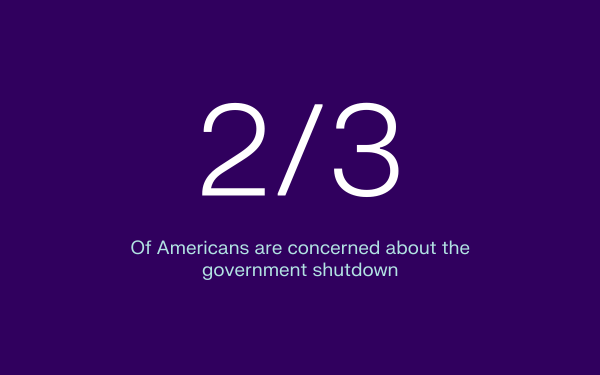

By the Numbers

Order in the Court?

The Supreme Court kicks off its new term this week, and it promises to be one for the books. Following a summer break-that-wasn't, the 2025-26 term confronts major questions about executive authority as President Trump remakes American government. With Chief Justice Roberts marking 20 years leading the Court, the stakes are exceptionally high across issues central to U.S. policy and governance. 

FGS Global’s expert court watchers have summarized the key issues and themes for the term ahead:

  • Executive power dominates: Court veteran Deepak Gupta observed in the New York Times: “It’s hard to imagine bigger tests of presidential power than these potentially once-in-a-century separation-of-powers battles, and we’re seeing more than one of them at once.”

  • Social issues return: Transgender rights take center stage through student athletics participation challenges. The Court will also examine "conversion therapy" bans, testing free speech boundaries in healthcare regulation.

  • Shadow docket signals: Early emergency rulings revealed a Court still defining its reach – allowing FTC Commissioner firing in Trump v. Slaughter but blocking Federal Reserve Governor removal in Cook v. Trump.

Strategic implications: Companies should monitor executive power cases for regulatory impacts while preparing for social rulings that will challenge corporate DEI positioning and stakeholder expectations.

Keeping Afloat

As the Trump administration continues to “flood the zone” with swift and sweeping policy changes, nearly every industry and organization will eventually be impacted. Given the speed at which events are unfolding, it is important to be proactive in planning.

When faced with a new policy that affects your organization, leaders have two key decisions: whether to cooperate or confront, and whether to do so publicly or privately. Each approach carries distinct risks and opportunities:

  • Public opposition: Take a public stand against a Trump/GOP policy initiative. Communicate directly with internal and external stakeholders. Connect opposition to your organization's mission, values, brand or stakeholders.

  • Discreet lobbying: Express opposition in a very targeted and discreet manner, engaging key stakeholders to help amend or alter Trump/GOP policy. Keep opposition targeted and non-public to avoid escalation of policy disagreement.

  • Supporting the president: Publicly support a Trump/GOP policy position. Communicate directly with internal and external stakeholders. Connect support to your organization's mission, values, brand or stakeholders.

  • Quiet compliance: Support a Trump/GOP policy initiative by complying, cooperating or selectively communicating with relevant stakeholders. Do not proactively publicly communicate, and do not publicly connect support to the organization's brand.

In an environment defined by volatility, clarity and foresight are your best assets. Our integrated team of policy experts and strategic communicators can help you minimize risk and capitalize on opportunities.

To learn more, reach out to FGS Global’s Alternative Futures team at AlternativeFutures@fgsglobal.com.

October 7, 2025
By Nedra Pickler, Irene Moskowitz and Erin Barth-Dwyer

Share

Want to see more of this in your inbox?