
APAC stocks climb a wall of worry

The macro: APAC stocks climb a wall of worry


Insight: Japanese and Australian shares hit fresh all-time highs this week and stock markets rallied across Asia Pacific after US President Donald Trump extended the truce in his trade war with China by another 90 days. The Nikkei 225 index is up a fifth over the past year and APAC, as a whole is outperforming the US. The MSCI Asia-Pacific index is up 15% year-to-date compared to less than 10% for the S&P 500. 

Impact: While economists continue to warn of geopolitical and economic volatility, investors have put April’s tariff shock behind them and are driving stocks in many markets higher, particularly across APAC. Partly this is because the real-world impact of US tariffs has been muted so far, while underlying activity remains broadly healthy: Japanese earnings are strong, Australian business confidence is at a three-year high and Singapore just upgraded its 2025 GDP growth forecast. Moreover, monetary conditions are broadly loose, supporting asset prices. The other underlying trend is a rotation out of US shares following a spectacular decade, with inflows benefiting APAC even more than Europe. That, at least, looks set to continue, whatever the ultimate impact of all the risks investors are currently ignoring.

Asia by numbers: 1884

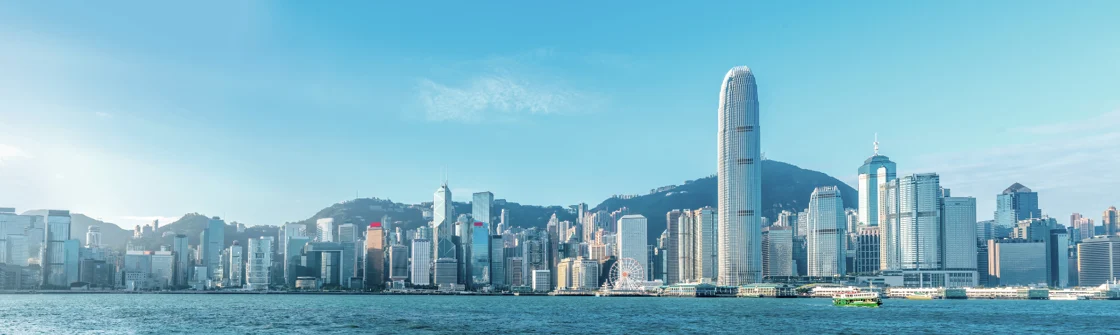
Hong Kong experienced its heaviest rainfall this August since records began in 1884, triggering the black rainstorm warning—the highest tier in the city’s alert system—four times in the span of eight days. This unprecedented deluge has brought widespread flooding, landslides, and disruptions to schools, hospitals, and the public transportation system, prompting reviews of the city’s infrastructure and emergency planning. 

The micro: Will Indonesia trigger a regional arms race?

Insight: Indonesia has become the first country in Southeast Asia to deploy a modern short-range ballistic missile (SRBM) system, marking a significant shift in the region’s military capabilities. The Turkish-made KHAN missile, with a range of up to 280km and sub-10m accuracy, was recently spotted at an Indonesian Army facility in East Kalimantan – the future site of the nation’s capital, Nusantara. The deployment extends Indonesia’s strike radius into sensitive maritime corridors, including areas overlapping with China’s “nine-dash line” near the Natuna Islands in the South China Sea. 

Impact: Southeast Asian nations have largely avoided acquiring modern tactical ballistic missiles, amid risks of escalating regional tensions. Indonesia’s move clearly changes that calculus. Beyond enhancing the defense of its new capital, the KHAN acquisition signals Jakarta’s intent to diversify away from traditional Western arms suppliers and deepen ties with partners like Turkey, potentially unlocking technology transfers and domestic production. While officials frame the system as part of an “active and defensive” posture, analysts warn it could spur an arms race, with countries like Vietnam and Thailand reassessing their own strike capabilities. In a region already shaped by South China Sea tensions, Indonesia’s ballistic leap adds both deterrence potential and a new layer of strategic complexity.  

News you can use: Asia’s ultra-wealthy go hands-on in the gold trade

Insight: Some of Asia’s richest families are moving beyond ETFs and vault storage to actively trading physical gold — sourcing from small-scale African mines, flying it to Hong Kong for refining, and selling to high-net-worth clients and Chinese state buyers. This revival of a centuries-old business model comes amid the commodity’s near 30% rally this year, a wobbling US dollar, and estimates that prices could climb as high as $4,000 an ounce in 2026 (from around $3,400 now). Hong Kong’s role as a bullion hub is also being reinforced, with China opening its first offshore gold vault in the city to streamline settlement for global players.

Impact: For the ultra-wealthy, gold is fast becoming a yield generator. From lending bullion to jewelers at 3–4% returns, to flipping discounted bars from Dubai for premiums in Hong Kong, the trade is drawing family offices, precious metals dealers, and strategic buyers. With more than half of Hong Kong’s wealthy doubling their gold allocations in the past year, the city’s bullion market is seeing strong inflows, though compliance risks and LBMA accreditation gaps remain a challenge. The question now: can this hands-on gold rush sustain its momentum before high prices cool demand, or will Asia’s elite cash out while the market is still glittering?

Read on at Bloomberg to learn more.  

If you read one thing: Remember your employees after the IPO

Initial Public Offerings (IPOs) are rebounding, with the first half of 2025 seeing 539 listings globally, up 17%. Over a third of these have been in Asia and China, with Hong Kong seeing more IPOs than any other stock market. Once public, company managements have new stakeholders to consider. But one group they should not neglect is the employees that made going public possible in the first place.

Here is how to keep them included and motivated.

August 15, 2025

Share

Want to see more of this in your inbox?