
Asia rallies on resilience

The Macro – Asia rallies on resilience

Insight: Asian equities have had a strong year. Even just in the past week, benchmark indices in Hong Kong, Japan, and Korea chalked up sharp weekly gains — Hang Seng up 2.7%, Nikkei 2.3%, and KOSPI 4.8%. China's A-shares have crossed 4,000 points for the first time in a decade, and the market capitalization of Chinese technology stocks has surpassed that of financials for the first time, underscoring the structural shift towards innovation-led sectors. The latest upswing reflects optimism about the potential reopening of the U.S. government, alongside supportive U.S. policy pivots toward China, and a surge in AI-driven enthusiasm in the tech sector. 

Impact: The increasing bullishness in Asia is more than a passing mood swing; it may mark the start of the structural change in global capital flows. Global investors, once wary of China’s slowing domestic growth and regulatory unpredictability, are now being drawn to resilient tech exports, solid corporate balance sheets, and the steep undervaluation of Asian equities compared to those on Wall Street. With the recent U.S. government shutdown highlighting Western regulatory risk, Asia stands out for both its insulation from Western volatility and exposure to long-term growth trends like energy transition and digital infrastructure. The region’s renewed momentum points to a broader rebalancing, as investors seek growth and resilience amid changing global dynamics. 
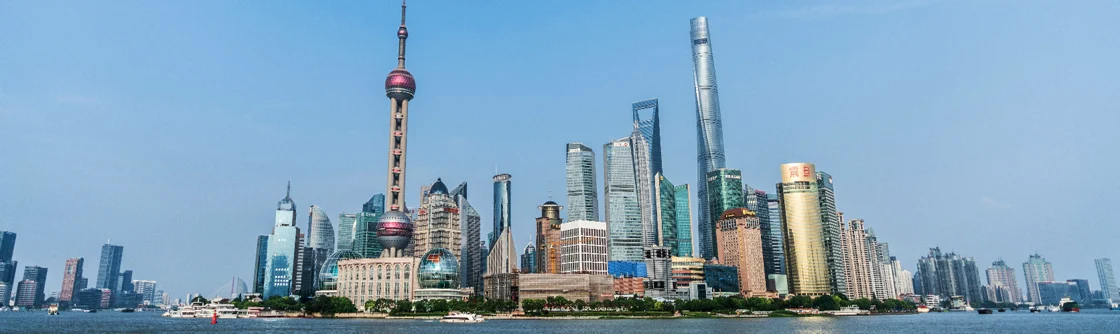
Asia by numbers: $800 billion

Following Toyota’s announcement that it will plough another $10 billion into US factories over the next five years, this is a rough total of all the investments Asian firms have pledged to make in America in response to President Trump’s tariffs. Major pledges have come from across the continent, from the likes of TSMC’s $165 billion investment from Taiwan and additional commitments from South Korea’s major conglomerates, alongside a $550 billion government-level agreement with Japan. How much of this giant sum materializes, remains to be seen.

The Micro – The world still seeks to trade with China

Insight: This year’s China International Import-Export (CIIE) trade show in Shanghai has been a success, with Chinese importers signing a record $83 billion of new deals, for everything from American soybeans and French vaccines to Norwegian algae and Swiss hearing aids. The value of deals was up 4% from the previous year and the fifth straight record high. 

Impact: Chinese consumers are still not the priority when Beijing sets economic policy — witness the latest Five-Year Plan, which focuses on investment into manufacturing and technology. The rest of the world, however, continues to want to sell them its ‘manufactures’, as 19th century merchants used to put it. Reassuringly, that appears to be continuing: the data from the latest CIIE trade fair suggests international commerce and globalization are alive and well — or at least proving resilient in the fact of geopolitical tensions and on-again-off-again trade wars. 

News you can use – Does COP still matter in Asia?

Insight: As delegates gather to debate in the Brazilian city of Belém for COP30, Asia faces a far more tangible clash — one hitting its coastlines and farmlands. The year’s deadliest typhoon, Kalmaegi, has killed nearly 200 people across the Philippines and Vietnam, reinforcing what scientists call the region’s “new climate normal”: stronger, wetter storms fueled by record-high temperatures. Across Southeast Asia, climate impacts are escalating faster than international finance or policy can catch up. The UN estimates that unless investment steps up massively, the region could lose up to 11% of GDP annually by the end of the century.  

Impact:  For many across the Global South, COP’s credibility is diminishing as global pledges have repeatedly failed to translate into actual spending on infrastructure, resilience, and livelihoods — access to the promised US$300 billion-a-year in climate finance by 2035 remains opaque. To be fair, not all ASEAN members have updated their 2035 climate targets on time. But while China dominates the clean energy race, most of Southeast Asia remains dependent on coal and vulnerable to extreme weather events. As the world’s focus shifts from mitigating climate change to adapting to it, COP30 must, at the very least, set out concrete metrics for such adaptation. And it must start to act — in the end, COP’s value to Asia will be proven not by the volume of its promises but by the velocity of its delivery. If Belém fails on both counts, it will cease to matter in a region that is already paying the price for failing climate diplomacy.

If you listen to one thing: China’s productivity paradox

A fascinating piece by Weijian Shan for Gavekal Dragonomics, challenging China’s ostensibly low productivity statistics and making some very strong points on how superficial comparisons of value added between China and the US are misleading. Mr. Shan, the co-founder and chairman of PAG, one of the biggest forces in private equity in Asia, is a committed China bull. His paper is certainly worth reading and the numbers don’t lie.

Read his paper here: Link

November 14, 2025

Share

Want to see more of this in your inbox?