
Is football coming home for Asia?

The Macro - Is football coming home for Asia?

Insight: This year’s World Cup presents Asia’s best chance in a long time of attaining national glory. An expanded roster of 48 teams, a record nine of which are Asian countries (up from five in prior editions), throws more Asian teams into the world’s most-watched tournament than ever before. Reaching the pinnacle of all national sporting achievement would undo a history of spectacular underachievement for the world’s most populous continent, which, whilst accounting for approximately 60% of the global population, accounts for exactly 0% of World Cup wins. Out of all the teams, Spain is the bookie’s favourite at ~9/2 to win outright. However, with Japan’s odds being ~65/1, making them a genuine dark horse, and the odds for South Korea (a semi-finalist in 2002) standing at ~400/1, an Asian victory is not unthinkable.

Impact: For either of these teams or any of their less likely Asian neighbours, winning would be seismic. Aside from an entire country being engulfed in what The Economist calls “secular rapture”, putting a star on your national football jersey provides tangible economic benefits as well. According to a study by the University of Aberdeen, winning the World Cup significantly boosts GDP growth in the following two quarters. Such tailwinds would be welcome in Asia where growth has been dented by the spillover from the Iran war. Beyond the economic impact of victory, World Cup duels are also a microcosm of international relations – potentially giving some matches a geopolitical impact that goes well beyond any battle on the pitch. Regardless of the result, Asia will be keeping its eyes on the ball this summer.
Asia by numbers – 50

The number of nuclear warheads North Korea is estimated to possess. As President Kim Jong Un boasted to visiting Chinese President Xi Jinping this week, the country has doubled its production of weapons-grade nuclear fissile material and can now produce six to seven new warheads a year. Its ultimate goal is to have 300 – out of an estimated total of 9,745 warheads held by the world’s nine nuclear-armed countries.

The Micro – Can Singapore build Asia’s next big money manager?

Insight: Singapore hardly lacks investment firepower...but perhaps there is still a gap? Recent news of state-owned investment company Temasek’s aggressive push to turn its Seviora arm into a true pan-Asian asset manager that can intermediate capital between Asia and the rest of the world suggests this is the case. The city-state already has GIC, its sovereign wealth fund which manages foreign reserves on behalf of the government, while Ministry of Finance-owned Temasek boasts a global portfolio across sectors from financial services and technology to infrastructure. But both are principally sovereign investors managing public capital; not third-party asset managers built to gather both institutional and retail money at scale.

Impact: The question is whether this is all really necessary or simply duplicative? Singapore has successfully established itself as a global wealth and fund management hub, but much of this industry remains dominated by US and European players, while Asian managers have historically been much more domestically oriented. That explains the ambition for Seviora: to create a homegrown platform with the distribution power, product breadth, and regional reach required to capitalize on rising demand for private markets exposure in the region. But scale alone won’t be enough, nor will its state-backed pedigree – the real test will be whether it can become a platform that global investors choose on truly commercial grounds. 

News you can use – US-China relations: a handshake followed by a punch

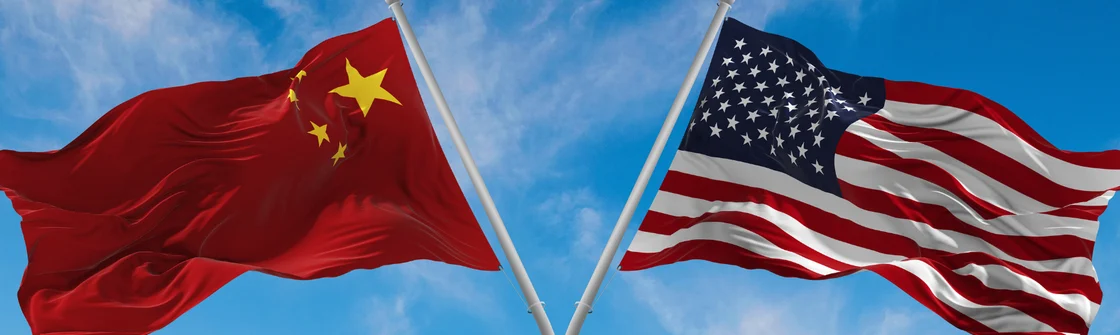
Insight: Following President Donald Trump’s visit to Beijing on May 13, China and the US agreed on what Chinese leader Xi Jinping called a “constructive relationship of strategic stability” -- a framework built on cooperation and moderate competition. Trade deals looked tangible, with China pledging at least $17 billion annually in US agricultural purchases through 2028, the purchase of 200 Boeing aircraft, and commitments on rare earth supply chains. But just three weeks later, the Pentagon has updated its Section 1260H "Chinese military companies" list, sweeping in Alibaba, Baidu, BYD, and others. The designations stop short of direct sanctions but will block US Defense Department contracts with these firms and ban third-party procurement from June 2027.

Impact: Everyone knew the handshake between the two leaders might turn out to be no more than a photo op – but it gave markets the optimism they needed, and for a moment, that was enough. Then came the 1260H list. The impact is less on immediate sales than on corporate reputation. These are all global brands and consumer-facing companies that have spent time and money telling international investors, partners, and regulators that they are commercial businesses first, not arms of state strategy. Being placed on a US military-linked list muddies the story. Does this signal a full turn back from friendlier US-China ties? Not necessarily. It just shows that the relationship may be improving at the leader-to-leader level while quietly tightening on advanced technology, national security, and economic guardrails. The handshake temporarily lowered the temperature, but it did not reset the thermostat. 

If you read one thing this week - Will Trump meet Kim again?

Returning to this week’s visit to Pyongyang by President Xi Jinping, the Korea Economic Institute of America (KEI) has an interesting take: namely that the trip by the Chinese leader could pave the way for a third summit between North Korea’s Kim Jong Un and U.S. President Donald Trump. Explore the arguments for and against such a meeting here.

June 12, 2026

Share

Want to see more of this in your inbox?