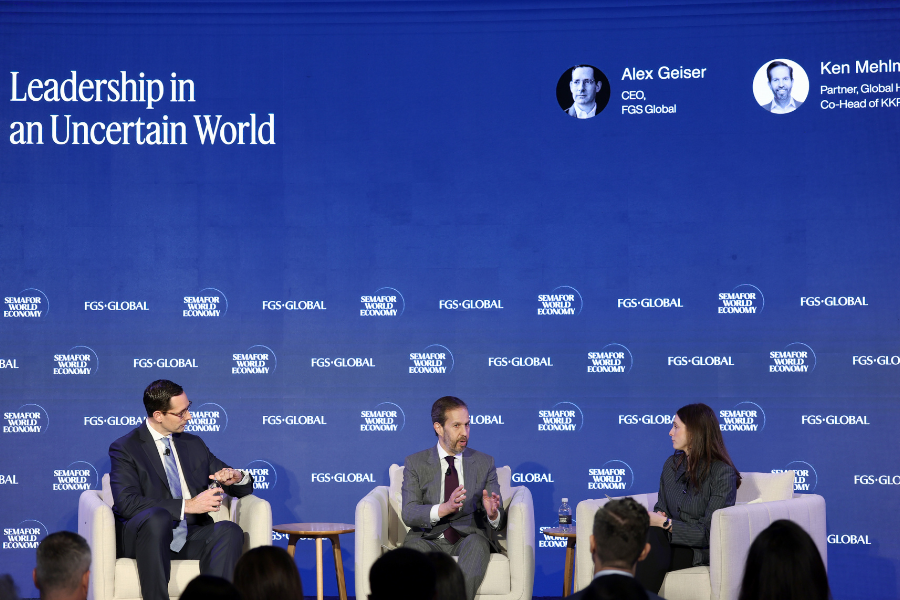
Last week, FGS partnered with Semafor for their second annual World Economy Summit in Washington. A sharp consensus emerged about how the operating environment for corporations has permanently shifted from optimization to resilience.
What We Heard
The pilot era for AI is over. The companies pulling ahead aren’t experimenting, they’re building. BCG Global Chairman Rich Lesser challenged CEOs to move from experimentation to execution and to ask how they are shaping the environment versus reacting to it.
The IMF’s January baseline has not held up. There is a wide cone of economic uncertainty for the remainder of this year and into 2027. Citadel CEO Ken Griffin warned central bankers face an impossible choice between treating the inflation spike as transitory or hiking to re-anchor expectations.
Allies are unbundling the U.S. relationship. They are refusing to let any single dispute or negotiation with the U.S. affect others. UK Chancellor of the Exchequer Rachel Reeves pushed for tariffs and non-tariff barriers reduced “both ways.” Spain’s Minister of Economy Carlos Cuerpo argued the U.S. trade relationship should be “treasured” separately from disagreements over Iran.
Markets are mispricing geopolitical risk. Structural blind spots carry real consequences. At the same time, capital flows are moving faster than trade deals or security pacts. Companies that wait for diplomatic clarity before acting will be late.
CEOs are now diplomats. A continuous presence in Washington is no longer optional. Active engagement is necessary to shift the policy conversation on issues that matter most to your business.
This is the second installment of Beyond the Beltway, a new series from FGS Global's Geopolitics team offering timely analysis on global geopolitical developments. For tailored insights on sectoral, geographic or scenario-specific risks, please reach out directly to geopolitics@fgsglobal.com.