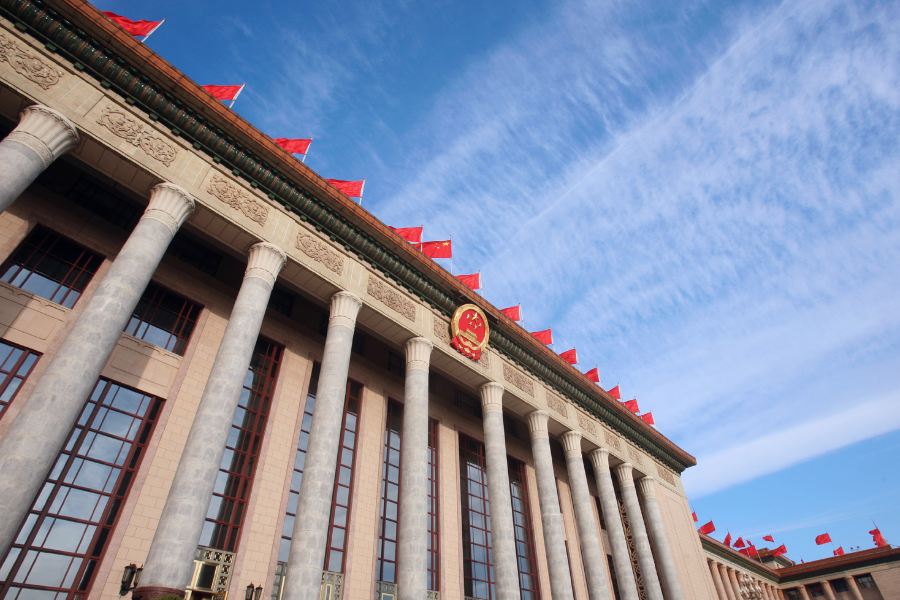
When Presidents Trump and Xi Jinping sat down at the Great Hall of the People last week, the room extended beyond heads of state. Seventeen American executives joined the delegation, including those representing Apple, Boeing, Cargill, Citi, GE Aerospace, Illumina, Meta, Nvidia, Qualcomm, Tesla, and Visa. Premier Li Qiang hosted the same group separately, pledging that China would “stay committed to expanding high-standard opening up” and that U.S. companies should “plan and grow with confidence.”
Presidential trade delegations are not unusual, though this visit carried specific weight. One of President Trump’s stated objectives for the visit was to negotiate U.S. commercial access to Chinese markets. The delegation was assembled with that purpose in mind. The structure of the delegation sent a deliberate signal to the Chinese government and the world: that business cooperation between the two countries is a primary objective of U.S.-China engagement, not a byproduct of it.
Pressure points:
Corporate access to government is now a competitive differentiator. In markets where policy and commerce are inseparable, positioning CEOs as diplomats is no longer a novelty – it is a strategic necessity.
It matters who is in the room. For U.S. companies without a presence in Beijing, it may be worth considering how that absence is perceived – both by Chinese authorities and regulators at home.
The entourage economy has reputational stakes. When a company’s leadership sits at the diplomatic table, it becomes associated with the outcome – positive or negative. Exposure to these dynamics should be mapped as an integrated commercial, regulatory, and reputational risk.
Beyond the Beltway, a series from FGS Global's Geopolitics team, offering timely analysis on global geopolitical developments. For tailored insights on sectoral, geographic or scenario-specific risks, please reach out directly to geopolitics@fgsglobal.com.