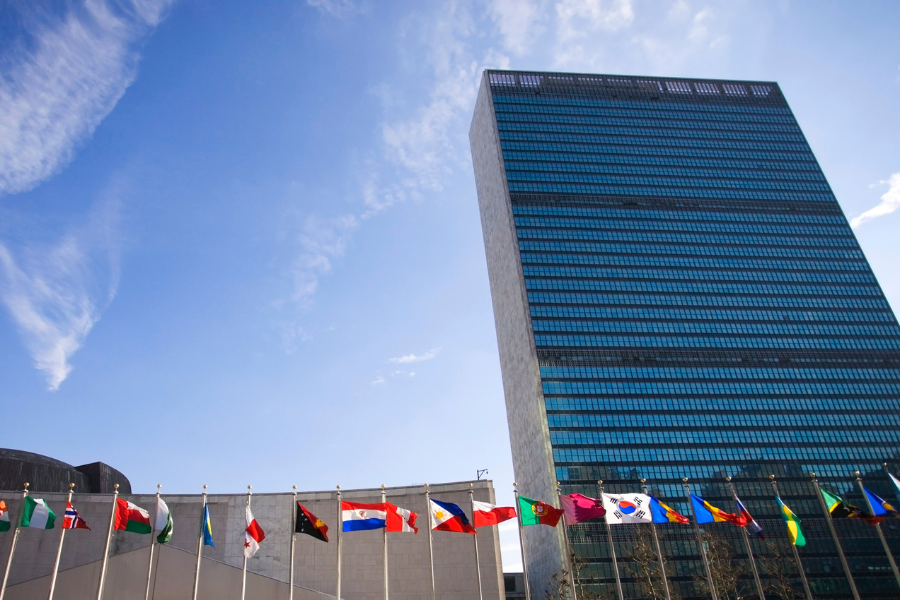
World leaders will convene next week for the 81st United Nations General Assembly (UNGA). This year’s theme of Restoring Trust, Managing Transformation: A United Nations that Delivers for All emerges as the multilateral system is under strain. The Security Council adopted only 16 resolutions so far this year, reform efforts remain deadlocked, and outgoing UNGA President Annalena Baerbock has called it a “make-or-break moment” for the institution.
Behind the podium, bilateral meetings, Memoranda of Understanding (MOU) signings, and new partnerships will shape how geopolitical alignments shift. For businesses with cross-border exposure, high-level week will reveal how that friction is reshaping the operating environment.
What We’re Watching:
U.S. positioning. The Trump Administration brings transactional leverage, but its standing with partners has frayed. Expect European and Indo-Pacific delegations to signal recalibration.
China-Russia coordination. The governments are expected to present a unified front on security and governance, with China pressing its advantage in multilateral rule-setting while Russia relies on that cover.
AI governance. The G20 Innovation Ministerial earlier this month produced a six-pillar statement on shared tech principles, but the U.S., EU, and China left no closer to agreement on binding frameworks. That divergence moves to New York.
Critical minerals and supply chains. African leaders will likely press for governance reform amid growing competition over market access, infrastructure investment, and energy transition financing.
Global health. A High-Level Meeting on Pandemic Prevention, Preparedness and Response will take place on September 25, with the WHO Pandemic Agreement still unratified and negotiations now pushed to 2027.
To learn more ahead of UNGA 2026, contact our team at UNGA@fgsglobal.com or visit our UNGA dashboard. For tailored insights on sectoral, geographic, or scenario-specific risks, please reach out directly to geopolitics@fgsglobal.com.