2026: Where AI meets enterprise and politics
State of play: 2026 is shaping up as a watershed year for AI adoption as companies move from experimentation to widespread deployment, while governments grapple with policy and ethical frameworks. With rapid advancements in generative AI, automation, and decision-support tools, it’s been predicted that data center spending could reach $4 trillion by 2030. This could be decelerated by lobbying efforts, which continue to shape ongoing debates around regulation, workforce impact, and geopolitical competition.
Why it matters: As AI becomes the norm in business and politics, competitive dynamics, operational models, and stakeholder expectations are set to be reshaped. Businesses must now balance innovation and productivity with responsible AI use, ensuring transparency and trust. The interplay between regulatory action and technological advancements is expected to define the next phase of digital transformation, something that avid users, company executives, and regulators will closely monitor.
🔗 Click here to discover the FGS Global Radar 2026 to learn more about the tensions underlying the explosive growth of AI.
Global regulators and governments clamp down on Grok and TikTok over AI concerns
State of play: Regulators across the EU, the UK, France and Australia are intensifying their scrutiny of AI-powered platforms, zeroing in on TikTok and X's Grok. The EU is pushing for greater transparency and accountability under the Digital Services Act, threatening hefty fines if platforms provide tangible solutions around content moderation, misinformation and child safety.
At the same time, there’s mounting alarm over Grok’s role in generating explicit deepfake images, especially those targeting women and children. Investigations are underway from Australia’s eSafety Commissioner, the UK’s Ofcom, and French lawmakers, while the U.S. Senate is looking to combat deepfakes with the new Defiance Act; all are responding to a rise in digital harassment and manipulated images spreading online as they recognize that current safeguards aren’t keeping up with the rapid evolution of generative AI.
Why it matters: This coordinated regulatory push is a wake-up call for tech platforms as the days of light-touch oversight are rapidly ending as pressure rises for transparency, updated safety measures and proactively managed risks. For those building or using these platforms, digital safety and responsible AI use are quickly shifting from being optional to something that must be front of mind.
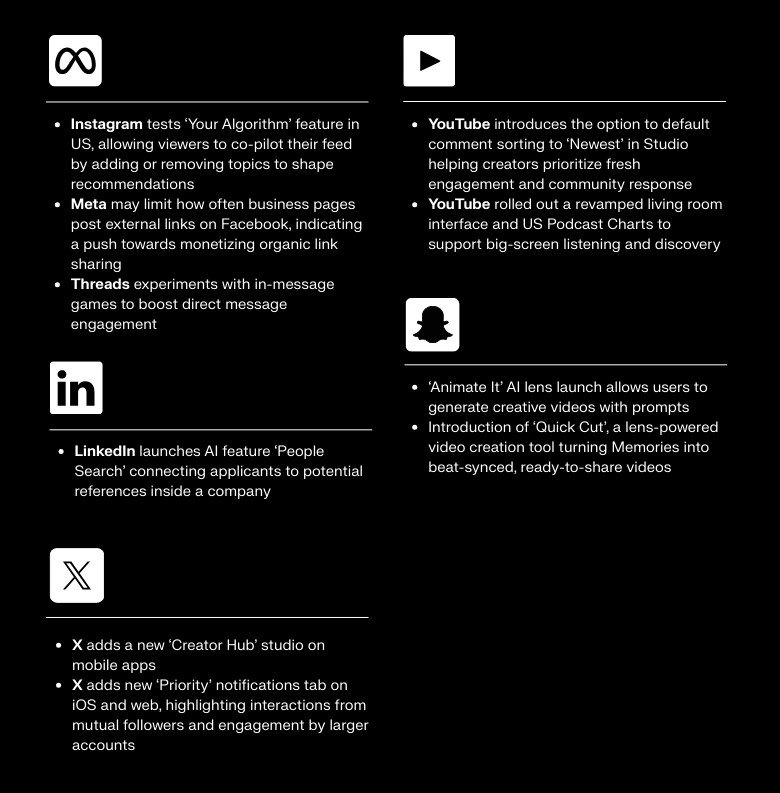
Streaming platforms lean into video podcasts
State of play: Netflix and YouTube are doubling down on video podcasts, offering a fresh way to reach audiences who are already moving away from traditional TV. The platforms are investing in exclusive content, making video podcasts a bigger part of their streaming mix and creating new spaces for brands to engage with fans in more interactive and visual formats.
Why it matters: This is a reminder for creators to rethink where and how to show up. Video podcasts offer a blend of sight, sound, and story, plus the targeting and measurement advantages of digital media. However, with more creators on the horizon, the competition for audience attention is ramping up, requiring creators to stay creative and agile to stand out in this evolving landscape.
Snapchat’s evolution into an e-commerce platform
State of play: Snapchat is rapidly evolving into a significant e-commerce channel, leveraging its AR features and young, engaged user base. The platform is rolling out new tools for brands and creators, including in-app storefronts and seamless shopping integrations, rivaling TikTok Shop and Instagram Shopping.
Why it matters: Snapchat’s entry into the world of e-commerce indicates shifting digital retail dynamics and new opportunities for brands targeting younger generations. Early adopters can benefit from lower competition and innovative engagement formats but must adapt to Snapchat’s unique content style. This signifies a need for omnichannel strategies to stay agile in the face of evolving commercial capabilities of social platforms.
DoorDash caught in viral AI hoax
State of play: DoorDash has found itself at the center of an AI-generated hoax that spread quickly on Reddit, sparking confusion before being debunked. This incident shows how quickly AI can be used to spread believable fake stories, and how fast misinformation can travel when social platforms are involved.
Why it matters: DoorDash's decision to respond publicly despite not being explicitly named was a bold move, but company leaders increasingly feel they can no longer wait while misinformation spreads like wildfire, especially when a hoax can feel plausible, reflecting existing frustrations with a company's services. This also underscores the importance of maintaining a wide-ranging monitoring and listening framework, that goes beyond immediate brand mentions, to identify a potential crisis before it snowballs.