Key Takeaways
H.E. Dr. Khalilur Rahman of Bangladesh was elected president of the 81st session of the United Nations General Assembly (UNGA) on June 2, 2026. He will begin his term on September 8 and preside over UNGA High-Level Week starting September 22. His Presidency will center on restoring trust in multilateral institutions and will oversee the selection of the next UN Secretary-General. For organizations with global stakeholders, his priorities on AI governance and development finance set a critical agenda that will have policy and operational implications across geographies and sectors.
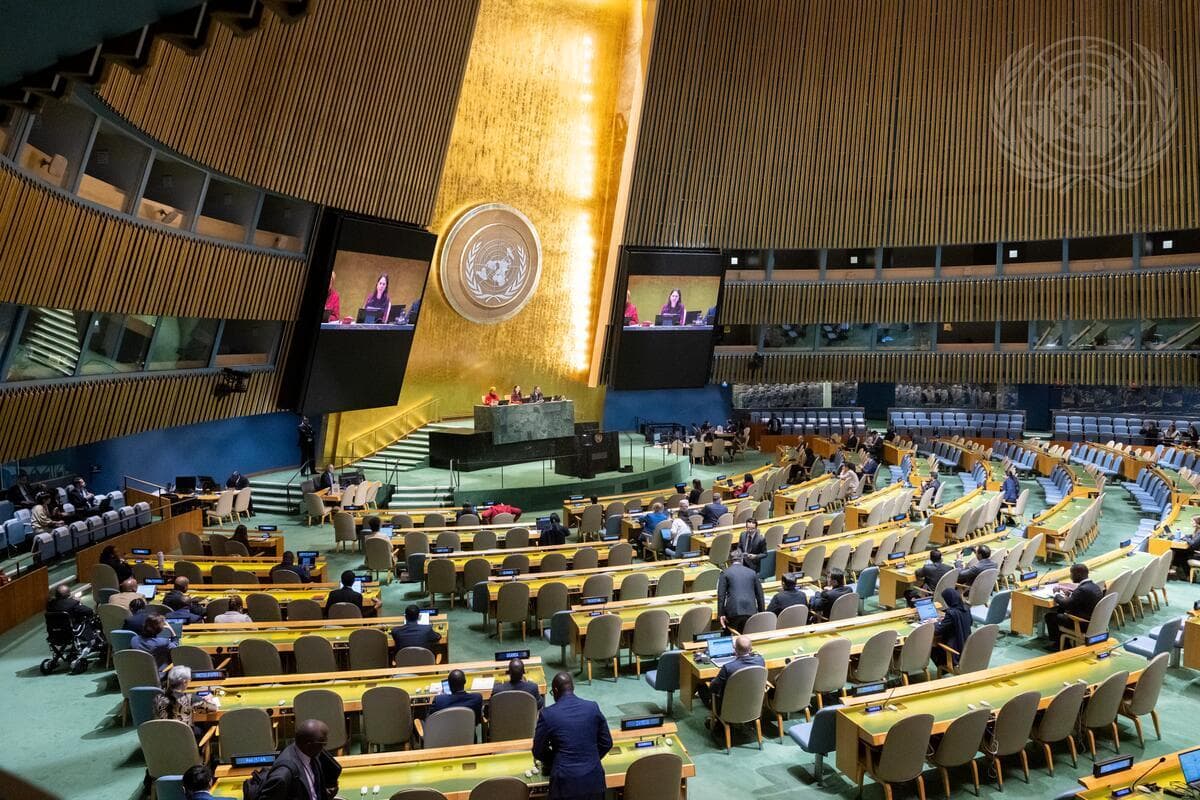
Every September, the United Nations General Assembly brings the world to New York. Heads of state, foreign ministers, CEOs, and civil society leaders converge on a single stretch of Midtown Manhattan for High-Level Week, setting the global agenda in ways that reverberate long after the motorcades leave. This year, that agenda will be shaped by H.E. Dr. Khalilur Rahman of Bangladesh, who was elected President of the General Assembly (PGA) on June 2, 2026, and takes up the role on September 8.
As PGA, Rahman sets the tone, manages the agenda, and shapes what the week delivers. Understanding his priorities is the starting point for any organization planning its UNGA strategy.
Who is Dr. Khalilur Rahman?
Rahman defeated H.E. Andreas Kakouris of Cyprus in a closely contested vote to lead the 81st session, which fell to the Asia-Pacific group under the UN's rotating regional cycle. He becomes only the second Bangladeshi ever to hold the position. High-Level Week will be his first major test on the world stage as PGA and an early indicator of how he intends to use the year ahead.
Rahman is not a newcomer to the UN system. A career diplomat and economist, he joined Bangladesh's foreign service in 1979 and has spent more than four decades at the intersection of multilateral diplomacy and development policy. He holds a doctorate in economics from Harvard University's Kennedy School and a law and diplomacy degree from Tufts University's Fletcher School. Prior to his election, he served as Bangladesh's National Security Adviser and High Representative on the Rohingya Issue under the interim government of Chief Adviser Muhammad Yunus, before being appointed Foreign Minister in February 2026 under Prime Minister Tarique Rahman.
What are Rahman’s priorities as president of the UN General Assembly?
Rahman has organized his presidency around a single overarching theme: Restoring Trust, Managing Transformation: A United Nations that Delivers for All. It is a framing that reflects the moment with precision. Trust in multilateral institutions is under strain. Funding for humanitarian action and development is declining. The SDGs are off track. And the UN system itself, as Rahman has acknowledged, remains "stuck in the world as it was in 1945, not the world of today."
His vision statement lays out six broad priorities for the session:
Peace and security – advancing preventive diplomacy and civilian protection
Sustainable development – accelerating SDG implementation with a particular focus on development financing gaps and least developed countries and small island developing states
Climate resilience – advancing coordinated global action on climate adaptation and disaster preparedness and holding governments accountable to the commitments they've made
Human rights – advancing protections for vulnerable populations, with particular attention to humanitarian action, refugees, and migrants
Digital governance and AI – building an inclusive governance framework for AI that leaves no country behind
UN reform – making the institution more effective, more representative, and more accountable
Why does this year’s session carry more weight than usual?
UNGA High-Level Week is always consequential. This year it arrives with a set of compounding pressures that make it especially significant for anyone with interests on the global stage.
The Secretary-General transition. Secretary-General António Guterres' term ends December 31, 2026, and the selection of his successor will be one of the defining processes of Rahman's tenure. The PGA plays a formal coordinating role in that process, convening member states, facilitating dialogue with candidates, and working alongside the Security Council to advance a recommendation. The process is already underway, and the outcome will shape the institutional direction of the UN for years to come.
A test for the Summit of the Future commitments. At the Summit of the Future in 2024, world leaders adopted three landmark agreements: the Pact for the Future, the Global Digital Compact, and the Declaration on Future Generations. Through these, countries committed to a sweeping reform of how the UN addresses peace, development, technology, and climate. The 81st session is where those commitments either gain traction or stall. The pressure is not only external; Rahman has pointed to internal fragmentation within the UN system itself as a problem that this session must begin to address.
A fast-maturing AI and digital governance agenda. The Global Digital Compact established commitments on inclusive AI governance and digital infrastructure. Rahman has made digital governance an explicit priority, signaling that the UN intends to be a serious player in shaping how AI and emerging technologies are governed globally. For companies operating in or around the AI space, this session will be a critical moment to shape how global governance frameworks develop.
A recurring development finance conversation. How development finance is mobilized, structured, and directed toward SDG implementation will be a recurring theme under Rahman. The financing architecture that emerges from the 81st session will carry real consequences for markets, international institutions, and the organizations that depend on them.
What does this mean for organizations coming to New York?
UNGA High-Level Week has long been the week when governments and global institutions set their agendas. Increasingly, it is also where corporate leaders, investors, and civil society organizations come to shape those agendas, find common cause, and demonstrate relevance on the issues that matter most to their stakeholders.
Under Rahman, the session's themes are not abstract policy questions. They map directly onto the reputational, regulatory, and strategic challenges that organizations are navigating right now. A presidency oriented around "restoring trust" and "managing transformation" provides a thematic backdrop that any organization serious about its multilateral stakeholder strategy should understand and engage with.
The question for leaders preparing for September is not whether to show up. It is how to show up with a clear point of view, a coherent narrative, and a strategy for engaging the right people at the right moments.
How FGS Global can help
FGS Global has spent decades working where business, government, and public opinion intersect, and UNGA High-Level Week is one of the highest-concentration moments of that intersection. The firm’s UNGA offering draws on its full depth across policy and public affairs, strategic communications, and stakeholder engagement to help organizations make the most of the week.
To learn more about how FGS Global supports organizations during UNGA High-Level Week, reach out to our team at UNGA@fgsglobal.com.
Photo credit: UN Photo/Manuel Elías