Germany's new pricing law, Trump's MFN order, and the EU Pharma Package are not three separate stories. They are one.
If you run government affairs, market access, or strategy for a pharmaceutical company operating in Europe, the past six months have handed you a problem that no single team can solve alone.
Washington is telling companies to charge Americans what they charge Europeans. Berlin is telling companies to accept deeper rebates or lose market access. Brussels is rewriting the rules on exclusivity, launch obligations, and what it means to earn regulatory protection. And all three are happening at the same time, with no coordination between them.
The result is a pricing environment that is tightening from every direction simultaneously. And Germany, as Europe's largest pharmaceutical market and a global reference price anchor, sits at the centre of it.
What Germany just did
On 29 April 2026, the German Federal Cabinet adopted the GKV-Beitragssatzstabilisierungsgesetz – the Contribution Rate Stabilisation Act. The name is bureaucratic. The implications are not.
Germany faces a structural funding gap of approximately €15 billion in 2027, rising to around €40 billion by 2030. The law is designed to close that gap through a combination of measures: higher GKV contribution rates, a reduction in the federal subsidy to the health fund from €14.5 billion to €12.5 billion, and a set of pharmaceutical cost-containment measures expected to generate approximately €1.9 billion in savings in 2027 alone.
Three measures will define the operating environment for the next decade.
The dynamic manufacturer rebate. From 1 January 2027, patent-protected medicines without a fixed reimbursement amount will carry a supplementary rebate on top of existing AMNOG-negotiated prices. It starts at a flat 3.5% for the first half of 2027. From July 2027, it becomes variable: if GKV pharmaceutical expenditure exceeds a growth corridor tied to the basic wage rate, the excess is recovered through a percentage rebate across the entire rebate-liable market. The mechanism is structurally asymmetric. In a system that is spending more than it takes in, the rebate will tend to rise. Industry association modelling from vfa and PharmaDeutschland suggests it could reach up to 50% by 2040 under adverse expenditure scenarios. That is not a forecast. It is the structural logic of the mechanism, and it is the number companies are stress-testing in their planning models.
The exemption – and why the next weeks matter. New active substances launched from 1 January 2027 may be exempt from the dynamic rebate if they meet two conditions: at least 5% of clinical trial participants at German sites, and active substance production in Germany sufficient to supply at least half of eligible patients over three years. The accompanying letter to the cabinet decision explicitly leaves open whether these conditions must be met cumulatively ("and") or alternatively ("or"). An "or" formulation would substantially broaden access to the exemption. The Bundestag votes on 26 June. That is the window. It is narrow and it is closing.
The abolition of AMNOG guardrails. The caps introduced in 2022, which limited reimbursement amounts to the cost of the appropriate comparator therapy for medicines with minor or non-quantifiable additional benefit, are removed. For companies whose products were negotiated under those caps, this restores meaningful flexibility. The special termination right for agreements concluded since November 2022 creates an immediate need to assess existing contracts.
Why this is not just a German story
Germany sets prices that travel. Because so many European countries use German reimbursement decisions as a reference point in their own negotiations, a lower net price in Germany does not stay in Germany. It flows through international reference pricing systems across the continent. That is the mechanism that connects Berlin to Brussels, Zurich, Warsaw, and beyond.
Now add Washington.
President Trump's Most Favoured Nation executive order, backed by voluntary agreements with 16 major manufacturers including AbbVie, Pfizer, Novartis, Novo Nordisk, and AstraZeneca, ties US prices to the lowest price available in comparable wealthy countries. [1] The logic runs in both directions. If European prices fall, US prices are pulled down with them. If companies try to protect US revenues by raising European prices, they face political and regulatory resistance from European payers who have no interest in subsidising American healthcare savings.
Pfizer's CEO Albert Bourla made the trade-off explicit at the JPMorgan healthcare conference in January: if forced to choose between reducing US prices to France's level or stopping supply to France, "we will stop supplying France." [2] That is not a negotiating position. It is a description of how the MFN mechanism changes the calculus of European market presence.
Novartis CEO Vas Narasimhan, speaking on 28 April, the same day Germany's cabinet adopted the GKV-BStabG, was direct: "We've seen recent moves, for instance, by the German government, who actually go in the wrong direction. And so that is very concerning." [3] The timing was not coincidental. The German law and the MFN pressure are now part of the same strategic conversation for every major manufacturer.
The UK, under US trade pressure, has already agreed to raise its cost-effectiveness threshold for national reimbursement by 25% in 2026. Italy has increased drug budgets to allow for higher prices. [1] Germany has moved in the opposite direction. That divergence matters – not just commercially, but politically.
And then there is Brussels
The GKV-BStabG lands alongside the most significant overhaul of EU pharmaceutical legislation in over two decades. The 2026 EU Pharma Package, which is expected to receive formal adoption this summer, restructures the entire framework of regulatory exclusivity, market authorisation, and the relationship between innovation and access.
The headline changes: shorter baseline exclusivity periods, with extensions conditional on genuine market presence and launch obligations across EU member states. New incentive mechanisms, including transferable exclusivity vouchers for priority antimicrobials. Tighter alignment between EU-level clinical assessment and national reimbursement decisions through the Joint Clinical Assessment process, which is already live.
The interaction with the German law is not theoretical. Joint Clinical Assessments will increasingly shape the evidence standards that German payers apply in AMNOG negotiations. A company that has navigated the EU-level process will find that its German negotiation starts from a different baseline than it did two years ago. The two reform processes were not designed together. Their combined effect on launch strategy, pricing, and R&D investment is cumulative regardless.
The three questions every pharma company is now asking
Where do we invest? The exemption conditions in the GKV-BStabG are, in effect, an industrial policy instrument dressed as a health financing measure. Germany is telling companies: run your trials here, make your active substances here, and we will protect you from the dynamic rebate. Whether that is a credible enough incentive to shift R&D and manufacturing decisions depends entirely on whether the "or" formulation survives the parliamentary process. Under "and", the exemption is accessible to a narrow set of products. Under "or," it becomes a genuine strategic option for a much broader portfolio.
Where do we launch first? Germany has historically been a priority launch market: rapid patient access, a predictable AMNOG process, and a pricing environment that, while demanding, was navigable. The dynamic rebate changes that calculation. A product launched in Germany from 2027 onward carries a rebate burden that is, by design, unpredictable. For companies managing global launch sequences and international reference pricing exposure, the question of whether to launch in Germany first, or to delay and observe, is now a live strategic decision, not a default.
What does this mean for patients? This is the question that tends to get lost in the commercial analysis, and it should not. The law's stated purpose is to keep contribution rates stable, which is a patient interest. Unaffordable premiums reduce coverage and access. On that measure, the law is doing what it says.
The risk sits on the other side. If the dynamic rebate and the exemption conditions in their current form reduce Germany's attractiveness as a launch market, the consequence is delayed or foregone patient access to innovative medicines. Germany's pricing decisions travel across Europe through reference pricing. A more restrictive German environment does not stay in Germany – it shapes what patients in Poland, the Czech Republic, and Portugal can access, and when.
The Novartis CEO's warning about European access to medicines is not a lobbying position. It is a description of how the system works. When the world's largest pharmaceutical market ties its prices to Europe's, and Europe's largest pharmaceutical market tightens its pricing simultaneously, the pressure has to go somewhere. The question is whether it goes to company margins, to R&D pipelines, or to patients.
The answer is probably all three. The proportions depend on decisions being made right now – in Berlin's parliamentary committees, in Brussels' legislative process, and in the boardrooms of companies deciding where to run their next trial.
What to do before 26 June
The Bundestag vote is only a few weeks away. The Bundesrat deliberates on 10 July. These are not abstract legislative milestones; they are the last points at which the exemption language, the scope of rebate contract therapy classes, and the treatment of existing agreements can be shaped.
Companies with products in the five defined therapy areas, namely JAK inhibitors, CGRP antagonists, PARP inhibitors, PCSK9 inhibitors, and PD-1/PD-L1 inhibitors, should be assessing their current reimbursement agreements against the special termination right now. Those with new active substances in development should be modelling both exemption scenarios. And those with a stake in the EU Pharma Package should be engaging in parallel - the two processes are not coordinated, but the window on both is closing at the same time.
Germany is not acting in bad faith. It faces a genuine structural funding problem and is making difficult choices under real fiscal pressure. But the pharmaceutical industry has a legitimate interest in ensuring that the solutions chosen do not inadvertently price innovation out of Europe's most important market. The window to make that case is open. It will not stay open long.
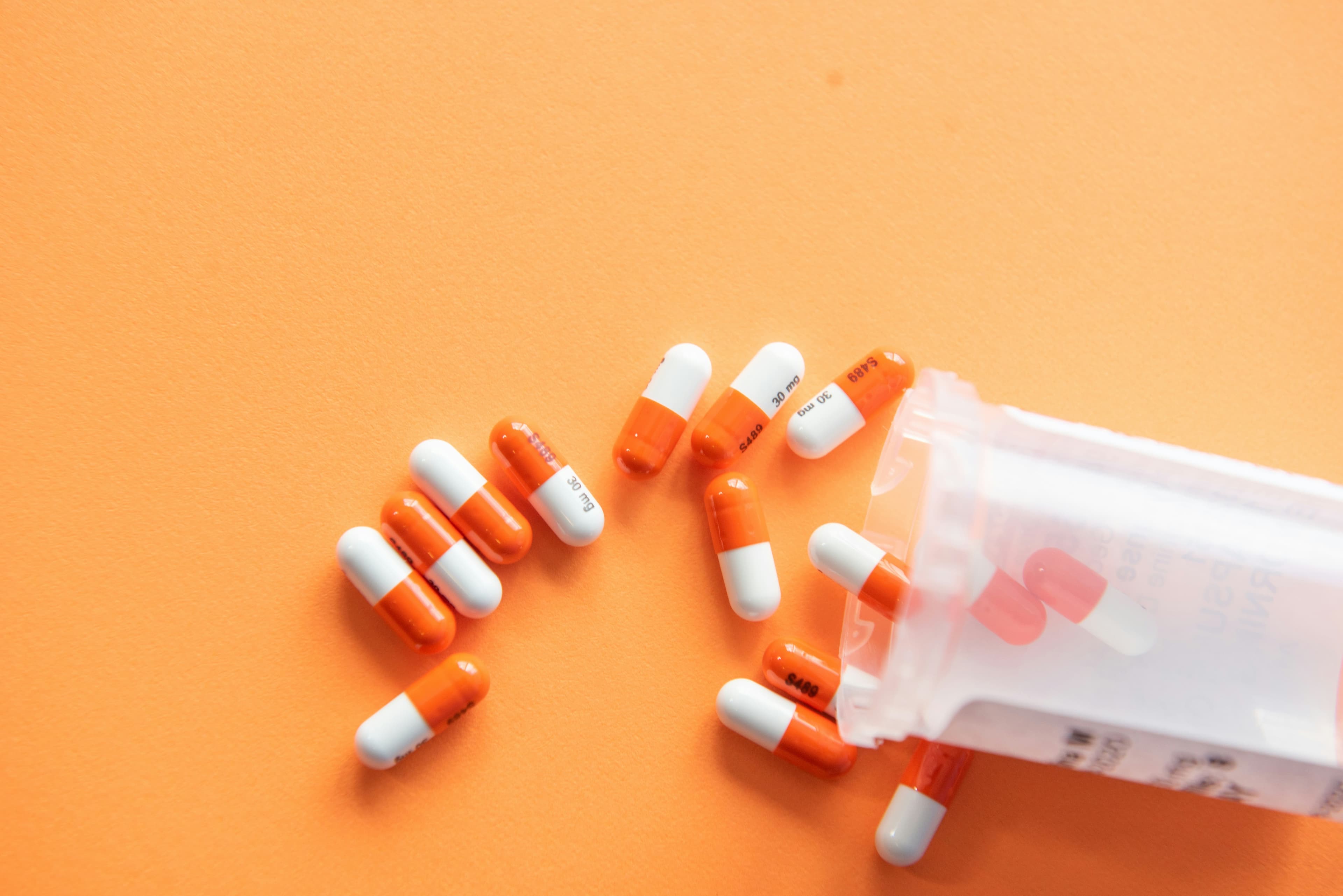
Picture by Christina Victoria Craft - Unsplash
Get in touch
FGS Global advises pharmaceutical and healthcare companies on policy strategy, market access communications, and stakeholder engagement across Germany and the EU. If you would like to discuss what the GKV-BStabG means for your business, and how to engage effectively before the parliamentary window closes, please contact: