The politics of cross-border deals today
Spotlight on France

How do political stakeholders view foreign investments in France? Which sectors and countries of origin attract the greatest scrutiny? Which aspects spark concern and what factors can make or break a deal? Building on our 2024 edition, we have taken another pulse check to illuminate the French public-political landscape shaping the fate of cross-border transactions.
Executive summary
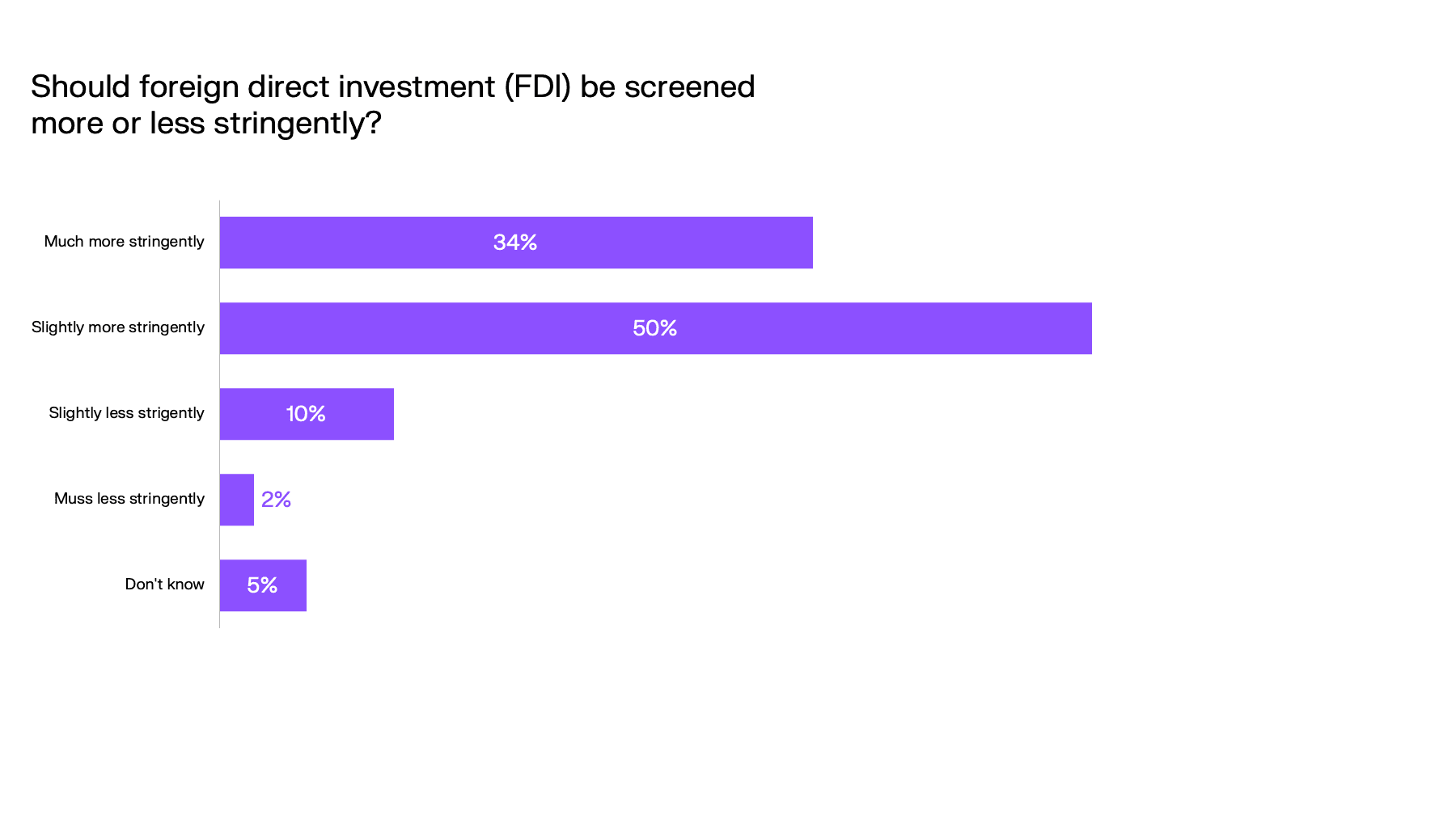
A robust, sovereignty-driven FDI climate. French respondents overwhelmingly support a stringent approach to FDI screening: half of the respondents call for slightly more stringent review, with a further 34% wanting “much more stringent” reviews. Only 12% want less scrutiny, reflecting a stable, high-scrutiny environment.
Chinese and, to a lesser extent, Middle Eastern investors face the closest scrutiny, with strong attention on U.S. investments as well. China (73%) and Middle Eastern countries top the list of investment origins for which respondents want closer investment reviews. Notably, the US (49%) also faces significant attention, reflecting ongoing geopolitical tensions and a heightened focus on economic sovereignty.
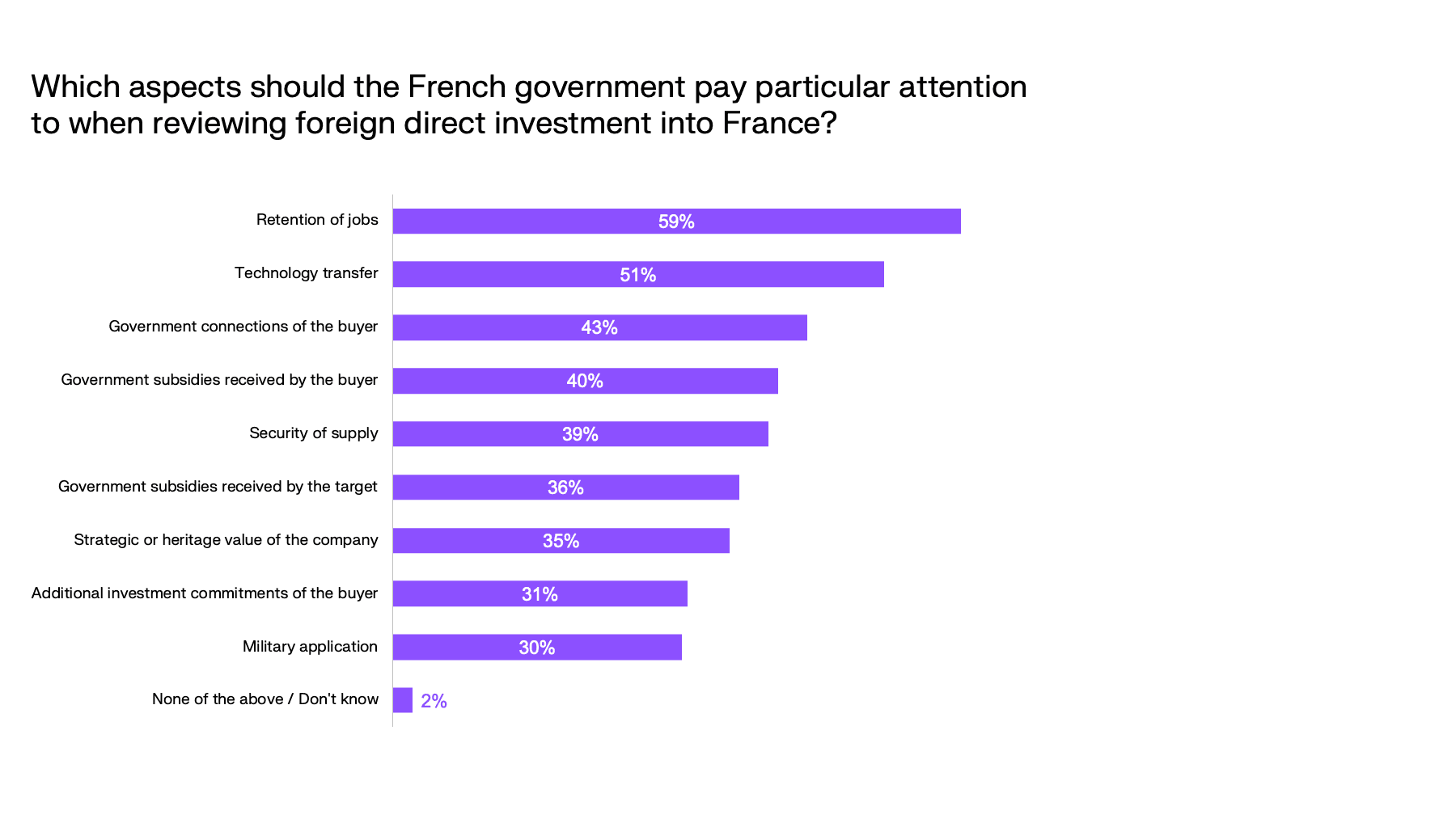
Critical deal factors go beyond security: jobs, technology and supply are paramount. Respondents prioritize job retention (59%), technology transfer (51%) and security of supply (39%) as key review criteria. Government connections of the buyer (43%) and military application (30%) are also important but secondary. These priorities mirror France’s national debate on economic competitiveness, deindustrialization and technological dependency on the U.S. and China.
Support for government intervention and strategic autonomy. A large majority (49% “always,” 44% “in specific cases”) favor the French government taking strategic stakes in sensitive sectors. Nearly two-thirds (64%) agree that some markets should be reserved for French or European investors. There is also strong support (60%) for requiring binding commitments (on jobs, technology, activity) in deals involving publicly subsidized targets.
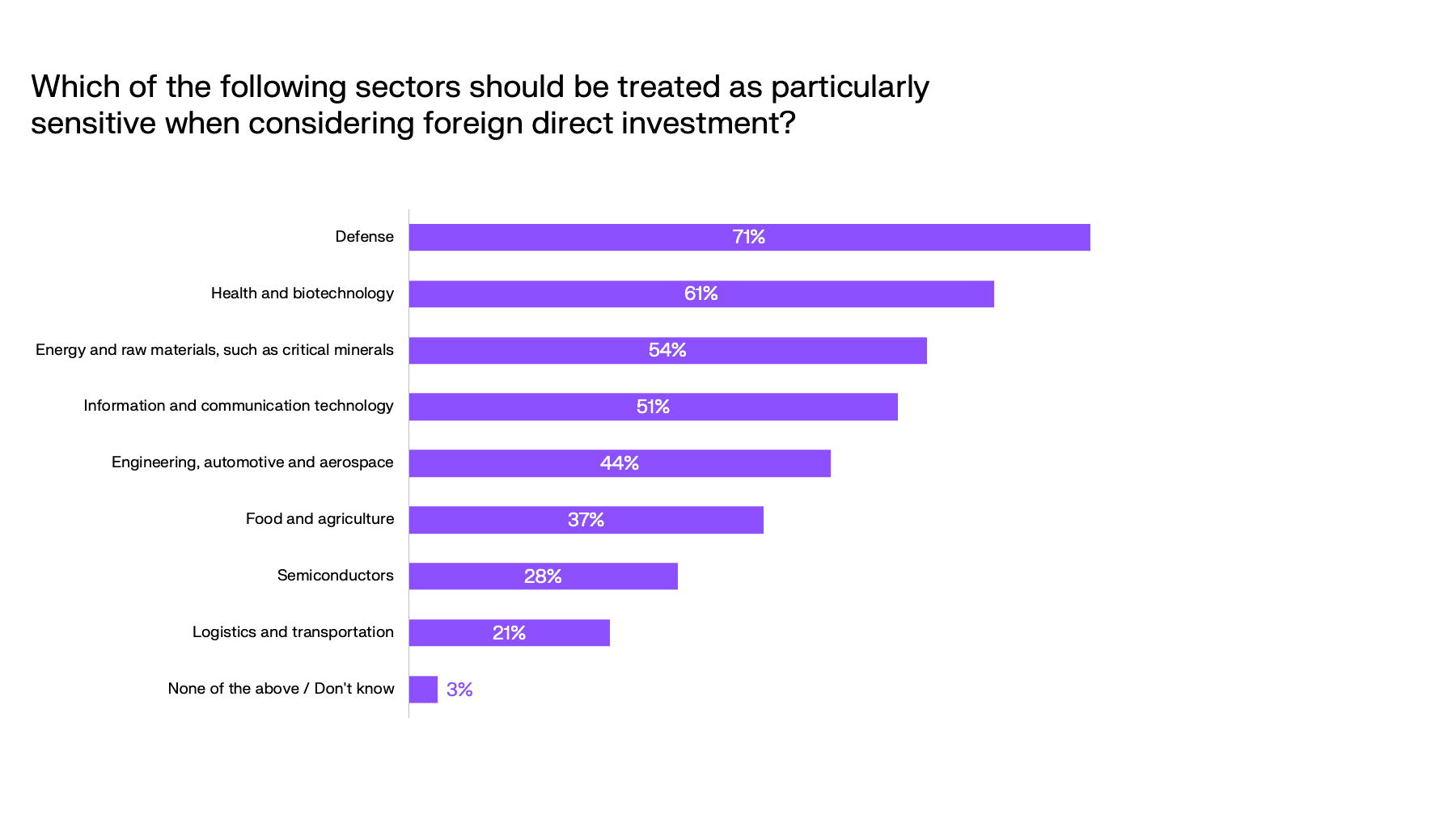
Tighter controls for sensitive sectors but openness elsewhere. Defense (71%), health/biotech (61%), energy/critical minerals (54%) and ICT (51%) are viewed as most sensitive. There is less concern for food/agriculture (37%) and logistics (21%), suggesting openness to FDI outside strictly defined strategic sectors.
France-specific recommendations: How to navigate the political-public landscape
Align deal structures with French priorities on economic sovereignty and technological leadership. Individual transactions are scrutinized for their impact on jobs, supply chains and technology. Dealmakers should proactively address these concerns — for example, by offering robust job guarantees, R&D commitments and assurances on local supply continuity — to build trust and preempt objections. In this context, partnering with local players, such as co-investing with the French public investment bank BPI, becomes increasingly critical and provides assurance to French regulators.
Frame deal communications around strategic value and national resilience. French authorities and the public expect investments to strengthen France’s long-term competitiveness and sovereignty. Beyond highlighting a deal’s financial or economic rationale, investors must increasingly demonstrate and communicate how the deal supports French and European technological leadership, secures critical capabilities and aligns with the government’s broader strategic industrial policy.
Anticipate and address sensitivities based on investor origin and sector. Investments from China and Middle Eastern states, as well as investments in sectors like defense, health and energy, trigger heightened scrutiny. Early, transparent engagement with regulators and stakeholders at all levels from local to national spheres —alongside credible mitigation plans— can help manage risks and smooth the review process.
Prepare for evolving legislative and regulatory requirements. France’s FDI regime is dynamic, with new guidelines published this year and a steadily expanding scope of review since 2014. Investors should monitor regulatory updates and be ready to adapt deal structures and engagement strategies accordingly.
Political context: France’s balancing act – openness vs. sovereignty
France remains a leading European destination for FDI, but the government’s approach is increasingly characterized by “open but vigilant” policies. The Ministry for the Economy, via the Treasury’s CIEF Bureau, has stepped up scrutiny of investments in sensitive sectors, especially where national security, technological autonomy, or economic resilience are at stake. Recent annual reports confirm a sharp increase in both FDI inflows and the number of deals subject to control, reflecting the public’s appetite for a robust screening regime.
The government’s commitment to “strategic autonomy” is visible in its willingness to take public stakes in key sectors, as highlighted by its recent acquisition of the submarine cables division of Nokia, to expand the definition of sensitive activities (notably in health, digital and critical raw materials) and to require binding commitments from foreign investors—particularly where public subsidies or critical technologies are involved. The latter increasingly takes the form of binding side letters negotiated on the margins of the screening procedure by the Economy Ministry and the investor at the highest working political levels, as exemplified by the Sanofi/CD&R case. This approach aligns with broader European trends toward tighter FDI screening, but France remains distinct in its high usage of conditions and commitments to approve transactions.
High FDI scrutiny shows no signs of easing; job retention and technology transfer remain main issues of concern
Survey results confirm a sustained high-scrutiny climate. A clear majority of French respondents (84%) want slightly or much more stringent FDI screening, and a full 68% say economic policy should be guided by security policy principles. This is not a temporary reaction to geopolitical crises, but a persistent trend reflecting deep-seated concerns about sovereignty, resilience and competitiveness.
Stakeholders focus on the tangible, domestic effects of foreign investments. The top review criteria are job retention (59%), technology transfer (51%) and security of supply (39%). Military application, government connections and subsidies are secondary but still important. For dealmakers, this means that credible commitments on jobs, technology and local operations are essential to winning support and navigating the review process.
Defense, health/biotech and energy are most sensitive; Chinese and, to a lesser extent, Middle Eastern investors under closest scrutiny
Foreign direct investments into defense (71%), health/biotech (61%), energy/critical minerals (54%) and ICT (51%) are considered most sensitive. This reflects both regulatory reality and political consensus around protecting strategic capabilities and critical infrastructure.
China (73%) and Middle Eastern countries are seen as the riskiest sources of FDI, followed by the U.S. (49%). This mirrors government priorities and public debate on technological dependence, state influence and strategic competition. Investors from these jurisdictions should expect intensive scrutiny and should prepare robust, transparent engagement strategies.
Stricter controls for sensitive cases, but openness and predictability elsewhere
Public decision makers support tough controls for sensitive sectors and investors but also want predictability and efficiency for routine cases. There is broad backing for government intervention —whether through strategic stakes, conditional approvals or market access restrictions— in sectors tied to national resilience. At the same time, there is little appetite for blanket protectionism: only 1% say foreign investment should never be allowed, and 36% support case-by-case restrictions.
French FDI discourse: Sovereignty, resilience, and competitiveness
Media and political discussions of FDI in France have shifted from episodic coverage of high-profile deals to a more continuous discussion linking FDI to national sovereignty, economic resilience and industrial strategy. The establishment of several parliamentary committees with widely covered reports on FDI underlines this trend. High-profile transactions (e.g., in defense, health, or tech) remain flashpoints, but the broader approach by decision makers focuses on France’s position in a volatile global economy and the perceived need to safeguard critical assets.
For dealmakers, this creates a need to understand and engage with these themes—not just at the regulatory level, but also in public communications and stakeholder engagement. The upcoming and long-awaited presidential and legislative elections in 2027 will further reinforce the growing need for political engagement around deals in France.